
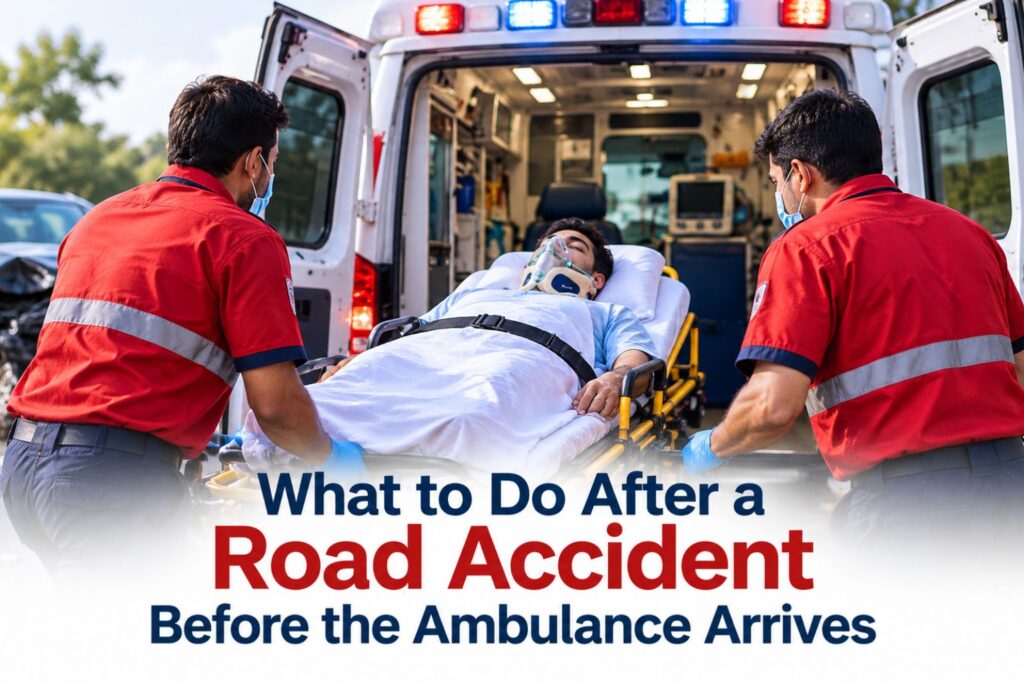
Road accidents can happen suddenly, leaving injured people, passengers, and bystanders unsure about what to do next. The first few minutes after an accident are important because additional injuries can occur if patients are moved incorrectly or if emergency assistance is delayed.
The safest approach is to first protect yourself and others from further danger, contact emergency medical assistance, and follow instructions from trained professionals. Avoid unnecessary movement of injured people, particularly when a serious injury to the head, neck, or spine is possible.
Professional ambulance services are equipped to safely assess, handle, and transport injured patients while providing medical support during the journey.
Move to a Safe Location When Possible
Before helping an injured person, look around the accident scene.
Check for dangers such as:
- Moving traffic
- Fire or smoke
- Fuel leakage
- Damaged electrical wires
- Unstable vehicles
- Broken glass
Do not put yourself in danger while attempting to help someone else.
If the area is unsafe, move away from immediate danger and wait for trained emergency personnel.
Call an Ambulance Immediately
If anyone is seriously injured, contact emergency medical assistance as quickly as possible.
Provide clear information about:
- Accident location
- Number of injured people
- Visible injuries
- Whether anyone is unconscious
- Whether anyone is having difficulty breathing
- Whether a vehicle is trapping a patient
If you need a dependable ambulance service in zirakpur, provide the ambulance operator with the exact location and relevant details about the accident.
Do Not Move an Injured Person Unnecessarily
One of the most important things to remember after a serious accident is to avoid unnecessary movement.
An injured person may have:
- Neck injuries
- Spinal injuries
- Head injuries
- Broken bones
- Internal injuries
Moving the patient incorrectly can potentially make some injuries worse.
Wait for trained ambulance personnel unless the person is in immediate danger from fire, traffic, or another hazard.
Check Whether the Patient Is Responsive
If it is safe to approach the patient, speak to them calmly.
Ask simple questions such as:
- Can you hear me?
- Are you able to speak?
- Where are you hurt?
Observe whether the patient responds normally.
If the person is unconscious, inform the emergency operator immediately and follow their instructions.
Check Breathing
Pay attention to whether the patient is breathing normally.
If the person is not breathing normally, seek immediate professional guidance. If you are trained in CPR, follow appropriate emergency instructions while waiting for medical assistance.
Do not attempt procedures you are not trained to perform.
Control Severe Bleeding
Serious bleeding requires immediate attention.
If it is safe to help, use a clean cloth, dressing, or bandage and apply firm pressure to the wound.
Remember:
- Keep pressure on the wound.
- Do not repeatedly remove the dressing to check the wound.
- Do not remove an object embedded in the wound.
- Tell the ambulance team about significant bleeding when they arrive.
Do Not Give Food or Water
After a serious accident, avoid giving the injured person food or water unless instructed by a medical professional.
The patient may require emergency procedures, sedation, or surgery, and medical professionals should determine what is appropriate.
Keep the Patient Calm
Accident victims may be frightened, confused, or in pain.
Speak calmly and reassure the patient that medical assistance is on the way.
Avoid asking the patient to stand or walk unless emergency professionals instruct you to do so.
Keeping the patient still and comfortable can help reduce unnecessary movement.
Do Not Remove a Motorcycle Helmet Unnecessarily
If a motorcyclist has been involved in an accident, avoid removing the helmet unless there is an immediate life-threatening reason and you have appropriate training or are directed by emergency professionals.
A helmet can provide protection, and unnecessary movement of the head and neck should be avoided when a spinal injury is possible.
Help the Ambulance Team Find the Accident Location
Once the ambulance is on the way, make it easier for the medical team to locate the accident.
If safe to do so:
- Send someone toward the road.
- Keep the entrance accessible.
- Share a nearby landmark.
- Provide accurate directions.
- Keep unnecessary people away from the injured person.
This can help reduce confusion when emergency teams arrive.
Keep Important Information Ready
When the ambulance arrives, provide whatever information you know.
Useful details include:
- How the accident happened
- Approximate time of the accident
- Number of injured people
- Known medical conditions
- Allergies
- Current medications
- Changes in consciousness
- Breathing problems
Do not delay the ambulance team with unnecessary information, but provide relevant details that may help them assess the patient.
Why Professional Ambulance Transportation Matters
Road accident victims may require more than transportation.
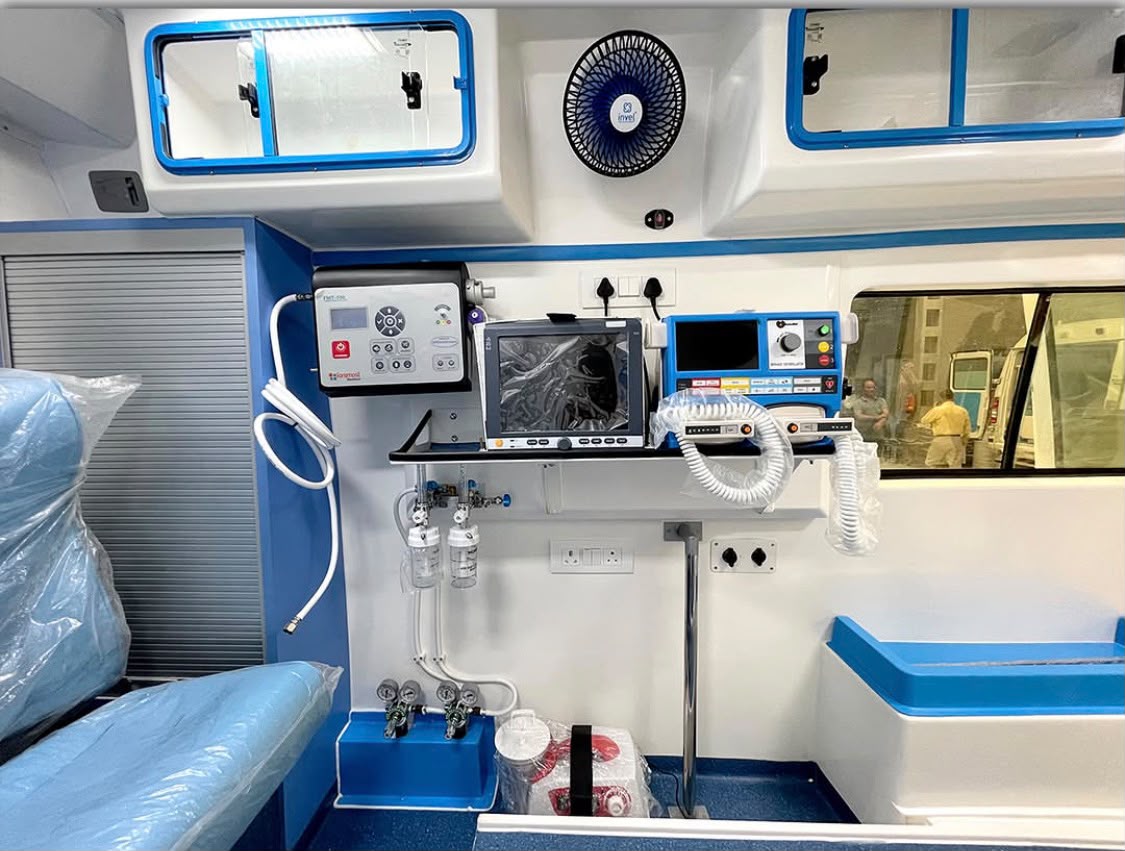
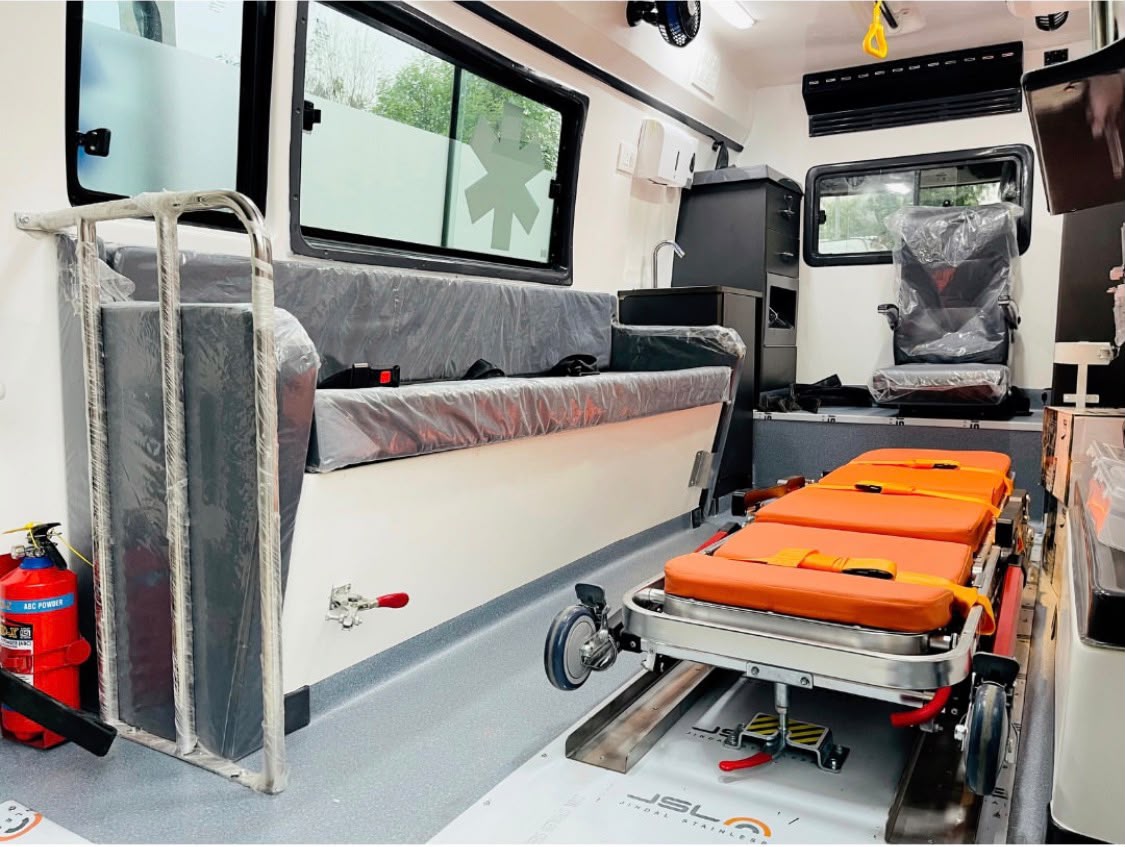
Professional ambulances can provide:
- Stretcher transportation
- Oxygen support when required
- Patient monitoring
- Emergency medical equipment
- Safe patient handling
- Trained medical personnel
This is particularly important when the patient has serious injuries or cannot safely sit in a private vehicle.
If the accident occurs around Chandigarh, RESQ Ambulance also provides ambulance service in chandigarh for emergency patient transportation.
Choosing the Right Ambulance for an Accident Victim
The type of ambulance depends on the patient’s condition.
A stable patient may require basic ambulance transportation, while a critically injured patient may need advanced medical support.
Depending on the situation, ambulance options can include:
- Basic Life Support Ambulance
- Oxygen Ambulance
- Advanced Life Support Ambulance
- ICU Ambulance
- Ventilator Ambulance
Read How to Choose the Right Ambulance for a Medical Emergency for more information.
When an ICU Ambulance May Be Required
Some accident victims may have severe injuries and require advanced monitoring or critical-care support.
An ICU ambulance may be considered when the patient requires:
- Continuous cardiac monitoring
- Advanced respiratory support
- Intensive medical supervision
- Infusion support
- Advanced emergency equipment
The appropriate ambulance should be selected according to the patient’s medical condition.
For patients requiring critical transportation around major hospitals, RESQ Ambulance also offers ambulance service near PGI Chandigarh and ambulance service near GMCH Sector 32 Chandigarh.
What Family Members Should Do
Family members can help by:
- Staying calm
- Providing medical information
- Keeping identification documents ready
- Bringing relevant medical records
- Informing the receiving hospital when appropriate
- Following instructions from ambulance professionals
Avoid crowding around the patient or attempting to perform procedures without proper training.
Preparing for Hospital Transfer
If the patient is being transferred from the accident scene to a hospital, keep important information ready.
If available, carry:
- Identification
- Previous medical records
- Medication information
- Allergy information
- Insurance documents
For additional guidance, read How to Prepare a Patient for Safe Ambulance Transportation.
Why Private Vehicles May Not Be Suitable
A seriously injured accident victim may need medical attention during transportation.
A private car generally cannot provide:
- Medical monitoring
- Oxygen equipment
- Emergency medicines
- Stretcher transportation
- Professional patient handling
For patients with serious injuries, professional ambulance transportation provides medical support that a normal vehicle cannot offer.
RESQ Ambulance also provides ambulance service mohali, ambulance service panchkula, and ambulance kharar for emergency and patient transportation across the Tricity region.
Common Mistakes to Avoid After an Accident
Avoid these common mistakes:
- Moving an injured person unnecessarily
- Giving food or water
- Asking an injured person to walk
- Removing a helmet without appropriate reason
- Delaying the ambulance call
- Allowing crowds around the patient
- Attempting medical procedures without training
- Driving a seriously injured patient in a private vehicle when professional ambulance support is available
The safest approach is to protect the scene, call for professional help, and follow emergency instructions.
Frequently Asked Questions
Should I move an accident victim?
Avoid moving an injured person unless there is an immediate danger such as fire, traffic, or another serious hazard.
What should I do if the accident victim is bleeding?
If it is safe to help, apply firm pressure to the wound using a clean cloth or dressing and wait for professional medical assistance.
Should I give water to an accident victim?
Avoid giving food or water unless instructed by a medical professional.
Should I remove a motorcycle helmet after an accident?
Avoid unnecessary helmet removal because movement of the head and neck can be risky when a spinal injury is possible. Follow emergency professional instructions.
What information should I give the ambulance team?
Tell them what happened, when the accident occurred, the number of injured people, visible injuries, and any known medical conditions or medications.
Conclusion
The moments immediately after a road accident can be confusing, but a calm and organized response can help protect injured people until professional medical assistance arrives.
Move away from immediate danger, call an ambulance, avoid unnecessary movement of injured people, control severe bleeding when appropriate, and follow instructions from emergency professionals.
Professional ambulance teams are equipped to safely handle accident victims and provide appropriate medical support during transportation to a healthcare facility.