

Breathing difficulties can occur suddenly and may become serious within a short period of time. A patient may experience breathlessness because of an existing medical condition, an infection, an allergic reaction, a heart-related problem, an injury, or another health emergency.
When breathing becomes difficult, transportation should be planned according to the patient’s condition. Travelling in a private car may not always be appropriate, particularly when the patient needs oxygen, monitoring, stretcher transportation, or assistance during the journey.
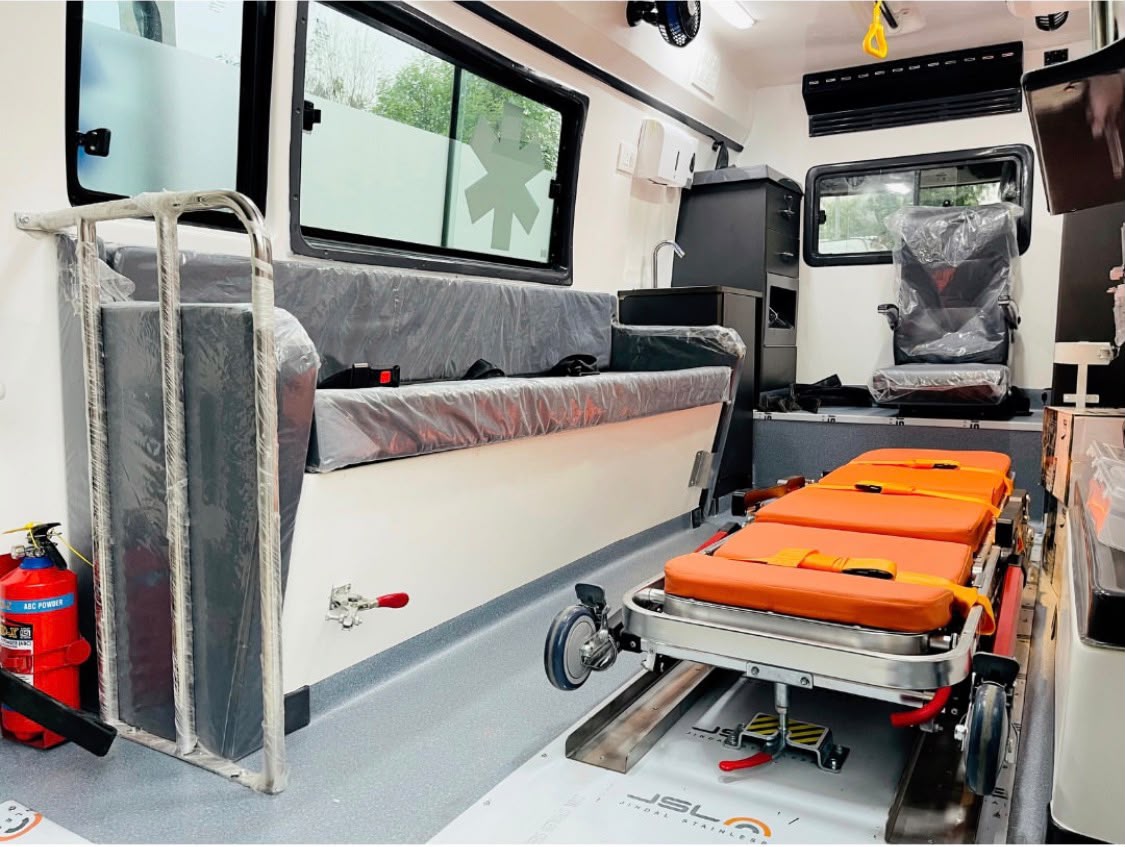
A professional ambulance provides a dedicated medical transportation environment where the patient can be positioned appropriately and transported toward the required healthcare facility.
When Breathing Difficulty May Require an Ambulance
Not every episode of breathlessness requires ambulance transportation. However, sudden, severe, or worsening breathing difficulty should be taken seriously.
An ambulance may be appropriate when a patient:
- Is struggling significantly to breathe
- Has sudden or worsening breathlessness
- Requires oxygen support
- Cannot comfortably walk to a vehicle
- Needs stretcher transportation
- Has become extremely weak
- Has difficulty speaking because of breathlessness
- Has experienced a serious injury
- Has a known medical condition and suddenly becomes much more breathless
- Requires urgent transportation to a hospital
If the patient’s condition appears life-threatening, emergency medical assistance should be requested immediately.
Why Private Vehicles May Not Always Be Suitable
A private car may be convenient for routine appointments, but it may not be suitable for a patient experiencing significant breathing problems.
A patient may need to remain in a particular position, require oxygen, or need close observation during transportation.
A family member driving the vehicle may also be unable to focus on the patient while driving.
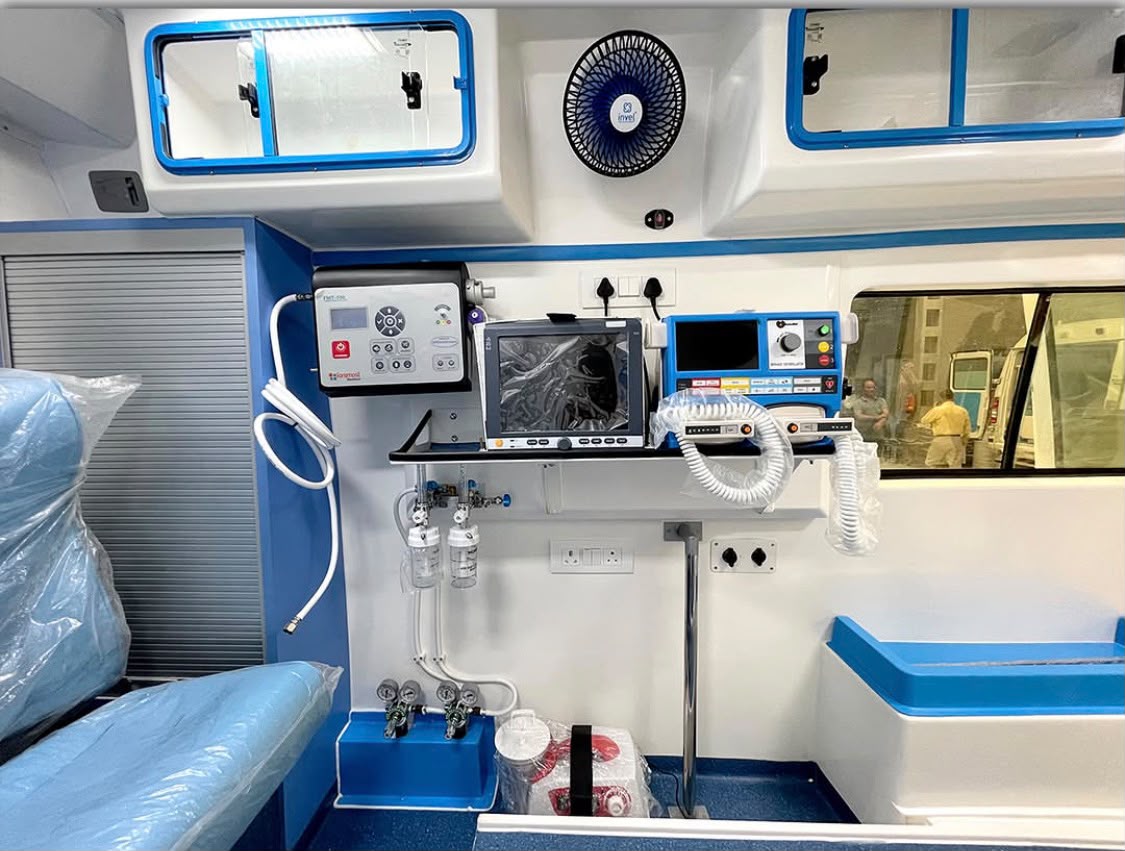
An ambulance is designed specifically for patient transportation and can provide equipment and assistance appropriate to the patient’s transportation requirements.
Oxygen Support During Ambulance Transportation
Some patients with breathing difficulties may already use oxygen as part of their medical care.
If oxygen is required during transportation, the ambulance provider should be informed when making the booking. This allows an appropriate ambulance to be arranged according to the patient’s needs.
Families should not assume that every ambulance has identical equipment or capabilities.
When booking, clearly explain whether the patient:
- Already uses oxygen
- Requires continuous oxygen
- Has recently experienced increased breathlessness
- Is being transferred from one hospital to another
- Needs a stretcher
- Requires additional medical support
Providing this information in advance helps the ambulance team prepare for the journey.
Positioning the Patient During Transportation
Patient positioning can be important when someone is experiencing breathing difficulty.
The ambulance team can assess how the patient should be positioned for transportation based on the circumstances and available medical guidance.
Families should avoid forcing a breathless patient to walk unnecessarily or making repeated attempts to move them without assistance.
If the patient cannot safely walk, the ambulance team can assist with the transfer using suitable equipment.
What Ambulance Teams Do Before Transportation
Before moving the patient, the ambulance team needs to understand the patient’s immediate condition and transportation requirements.
The team may gather information such as:
- What symptoms the patient is experiencing
- When the breathing difficulty started
- Whether the condition is getting worse
- Whether oxygen is already being used
- Whether the patient has a known medical condition
- Whether the patient can sit or needs a stretcher
- Where the patient needs to be transported
This information helps determine how the patient should be transported.
For emergency situations, the priority is to arrange appropriate medical assistance without unnecessary delay.
Breathing Difficulties During Hospital Transfers
Some patients develop breathing difficulties while already receiving treatment at a hospital.
They may need to be transferred to another facility for specialist care, additional testing, or continued treatment.
Hospital-to-hospital transportation can require more planning because the patient’s condition may require additional support during the journey.
The referring hospital should communicate relevant medical information and transportation requirements to the ambulance provider.
Families arranging an ambulance service near PGI Chandigarh can use the relevant RESQ Ambulance service page when planning transportation connected with PGI.
Similarly, patients requiring transportation associated with another major medical facility can refer to the ambulance service near GMCH Sector 32 Chandigarh service page.
When a Stretcher Ambulance May Be Needed
A patient with breathing difficulty may also have limited mobility.
If the patient cannot safely walk from their bed to a vehicle, stretcher transportation may be more appropriate.
This can be particularly important for:
- Elderly patients
- Patients recovering from surgery
- Weak or bedridden patients
- Patients with serious injuries
- Patients receiving oxygen
- Patients who become severely breathless with movement
Families should mention the patient’s mobility status during the booking process rather than waiting until the ambulance arrives.
How Families Can Prepare Before the Ambulance Arrives
While waiting for medical transportation, families can prepare important information and documents.
Keep ready:
- Patient identification
- Medical reports
- Current prescriptions
- List of regular medicines
- Recent test reports
- Hospital records
- Doctor’s contact information
- Emergency contact information
If the patient uses prescribed oxygen or medical equipment, inform the ambulance provider about it.
Avoid unnecessary movement of a patient who is experiencing significant breathing difficulty.
If the condition suddenly becomes worse while waiting, contact emergency medical services again and provide the updated information.
Choosing the Right Ambulance
Different ambulances are equipped for different transportation requirements.
A stable patient who mainly needs safe transportation may require a basic patient ambulance.
A patient with more serious medical needs may require an ambulance equipped for additional medical support.
For example, patients requiring closer monitoring or advanced support may need an ICU ambulance, while patients who need oxygen during transportation may require an oxygen-equipped ambulance.
The important point is to match the ambulance to the patient’s actual condition.
When booking, explain the patient’s condition instead of simply requesting a particular ambulance type without providing any medical information.
Breathing Difficulties and Emergency Transportation
Sudden breathing difficulty can sometimes be a medical emergency.
Emergency warning signs may include:
- Severe difficulty breathing
- Sudden worsening of breathlessness
- Blue or grey appearance around the lips or face
- Loss of consciousness
- Severe chest discomfort
- Confusion or inability to respond normally
- Serious injury accompanied by breathing problems
These symptoms require urgent medical attention.
Families should not attempt to diagnose the cause of severe breathing difficulty themselves. The safest approach is to seek appropriate emergency medical assistance.
Ambulance Transportation From Nearby Areas
Patients with breathing difficulties may need urgent transportation from homes, clinics, nursing facilities, or hospitals.
For families arranging an ambulance number in zirakpur, keeping reliable ambulance contact information available can be useful when a patient has an existing medical condition.
Patients requiring transportation from nearby areas can also arrange an ambulance service in kharar according to their medical transportation requirements.
For patients requiring transportation within the city, an ambulance chandigarh service may be needed for hospital visits, emergency transportation, or patient transfers.
Families in the surrounding region may also need an ambulance service in mohali when a patient requires transportation to a hospital or specialist facility.
For patients travelling from the neighbouring area, an ambulance number in panchkula can be useful to keep available for situations where professional medical transportation is required.
Breathing Problems During Long-Distance Transportation
Long-distance patient transportation requires additional planning when the patient has breathing difficulties.
Before the journey, the family should discuss:
- Expected travel distance
- Patient’s current condition
- Oxygen requirements
- Mobility
- Need for stretcher transportation
- Medical equipment
- Destination hospital
- Any special transportation instructions
If a patient has an unstable or worsening condition, the treating medical team should be involved in deciding the appropriate transportation arrangement.
Our earlier guide, How Ambulance Services Support Patients During Long-Distance Transfers, also explains important considerations for extended patient journeys.
Why Family Members Should Share Accurate Information
One of the most useful things a family can do when booking an ambulance is provide accurate information.
Instead of simply saying that the patient is “not feeling well,” explain the actual transportation requirement.
For example:
“The patient is having difficulty breathing, uses oxygen, cannot walk independently, and needs to go to the hospital.”
This gives the ambulance provider more useful information when arranging transportation.
If the patient is being transferred from one hospital to another, mention the current hospital and destination before the ambulance is dispatched.
What Not to Do During Severe Breathing Difficulty
When a patient is struggling to breathe, unnecessary movement can make the situation more difficult.
Families should avoid:
- Making the patient walk unnecessarily
- Delaying emergency assistance while searching for transportation
- Attempting complicated patient transfers without help
- Ignoring rapidly worsening symptoms
- Giving medicines that were not prescribed for the patient
- Assuming that severe breathlessness will resolve on its own
Follow instructions from qualified medical professionals and seek emergency assistance when required.
How Professional Ambulance Transportation Helps
An ambulance provides a controlled environment for moving a patient from one location to another.
For patients with breathing difficulties, this can be particularly useful when they require:
- Oxygen support
- Stretcher transportation
- Assistance with movement
- Medical equipment
- Monitoring during transportation
- Hospital-to-hospital transfer
The appropriate level of ambulance support depends on the patient’s condition.
Related Patient Transportation Services
Breathing difficulties can occur alongside other medical conditions, so patients may require different types of transportation depending on their overall needs.
For example, patients with severe medical conditions may require ICU ambulance transportation, while stable patients may need basic patient transportation.
Our previous guide When Should You Choose a Basic Life Support Ambulance? explains situations where a BLS ambulance may be considered.
You can also read How ICU Ambulances Provide Critical Care During Patient Transport to understand how higher-level ambulance transportation may support patients with more complex medical needs.
For families preparing for transportation, How to Prepare a Patient for Safe Ambulance Transportation provides additional practical information.
FAQs About Ambulance Transportation for Breathing Difficulties
When should I call an ambulance for breathing difficulty?
An ambulance should be considered when breathing difficulty is sudden, severe, worsening, or accompanied by other serious symptoms such as loss of consciousness, severe chest discomfort, confusion, or significant weakness.
Can an ambulance provide oxygen during transportation?
Some ambulances are equipped to provide oxygen support. Tell the ambulance provider about the patient’s oxygen requirement when booking.
Can a breathless patient travel in a private car?
It depends on the patient’s condition. If breathing difficulty is significant or worsening, professional medical transportation may be more appropriate than a private vehicle.
Can an ambulance transport a patient from home to a hospital?
Yes. Ambulances can transport patients from homes, clinics, nursing facilities, and other locations to hospitals when medical transportation is required.
What information should I give when booking an ambulance?
Explain the patient’s symptoms, mobility, oxygen requirement, current location, destination, and any known medical or transportation requirements.
Can an ambulance be used for hospital-to-hospital transfers?
Yes. Ambulances can be arranged for hospital-to-hospital transfers when the patient’s condition requires medical transportation.
Is every ambulance equipped for serious breathing problems?
No. Ambulances can have different equipment and capabilities. The patient’s condition and transportation requirements should be explained when booking so an appropriate vehicle can be arranged.
Conclusion
Breathing difficulties should always be taken seriously, particularly when symptoms are sudden or worsening. For patients who require oxygen, stretcher transportation, mobility assistance, or medical support during a journey, an appropriate ambulance can provide a safer transportation environment than an ordinary private vehicle.
Families can help by providing accurate information when booking, preparing relevant medical documents, and following professional medical guidance.
For serious or rapidly worsening breathing difficulty, seek emergency medical assistance without unnecessary delay.