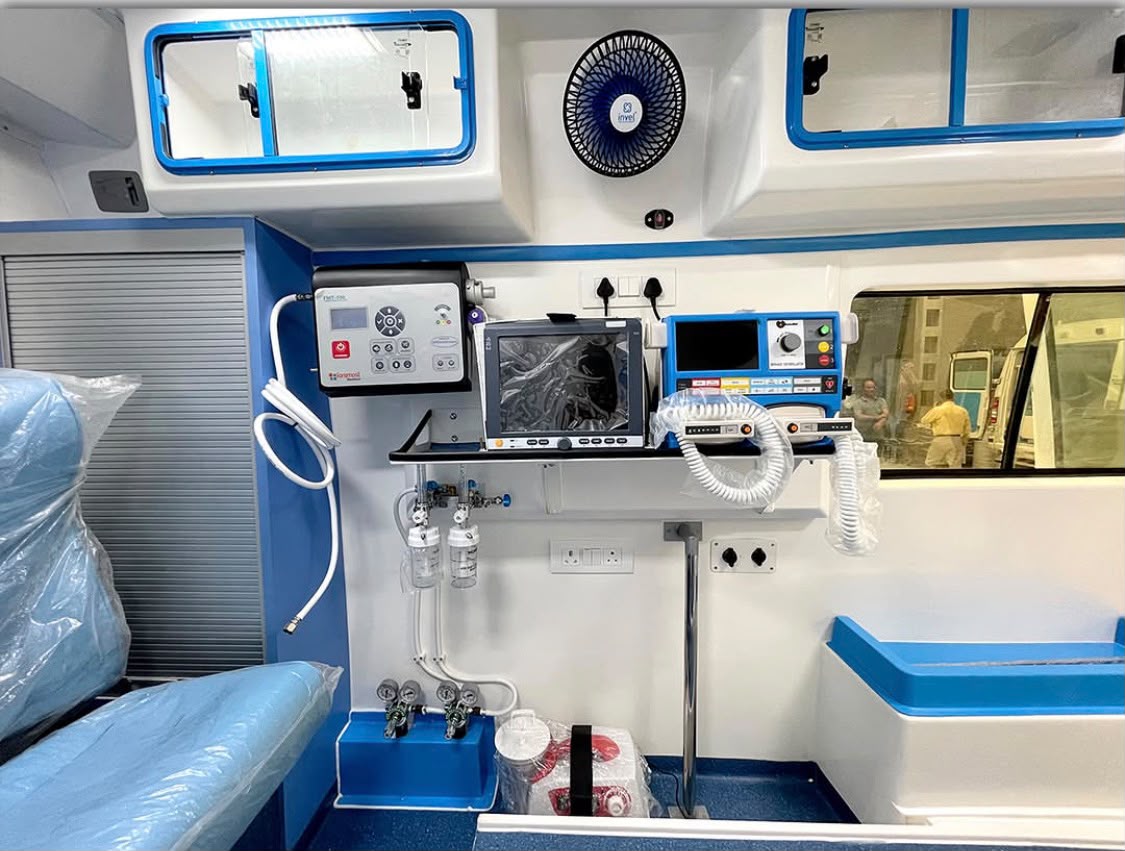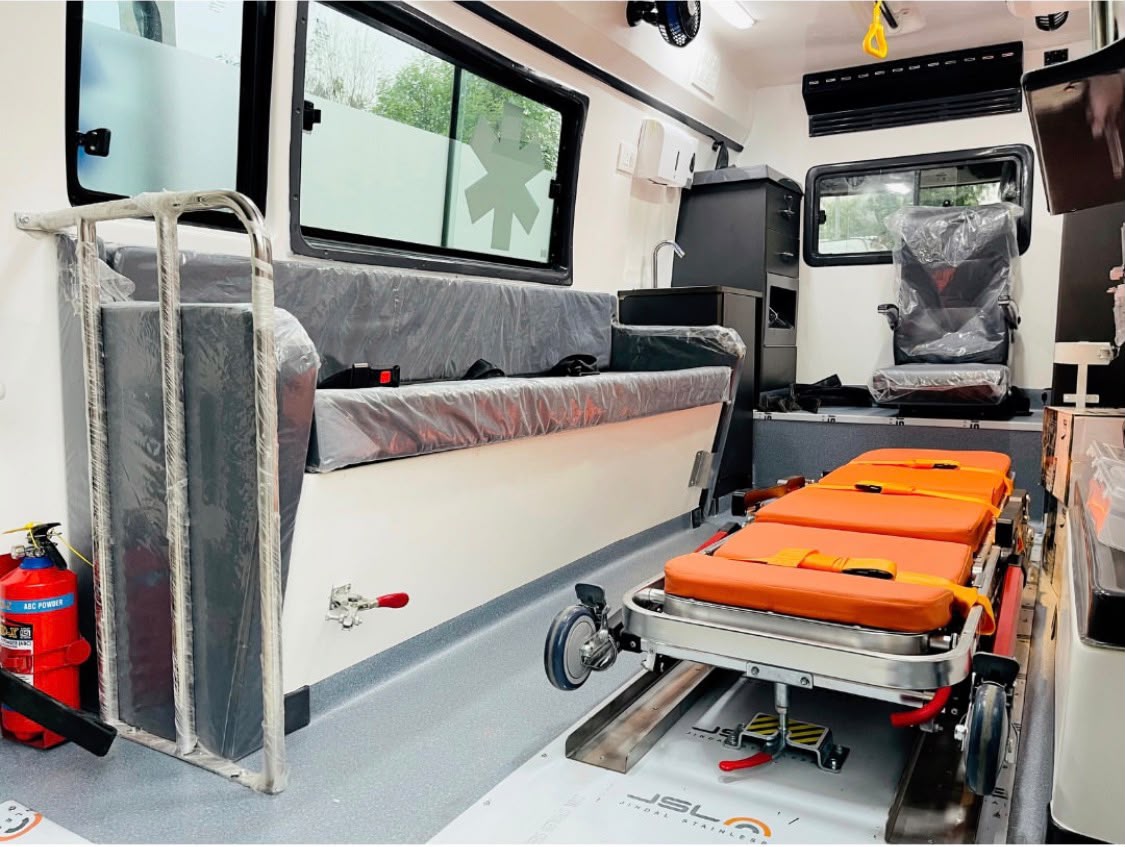

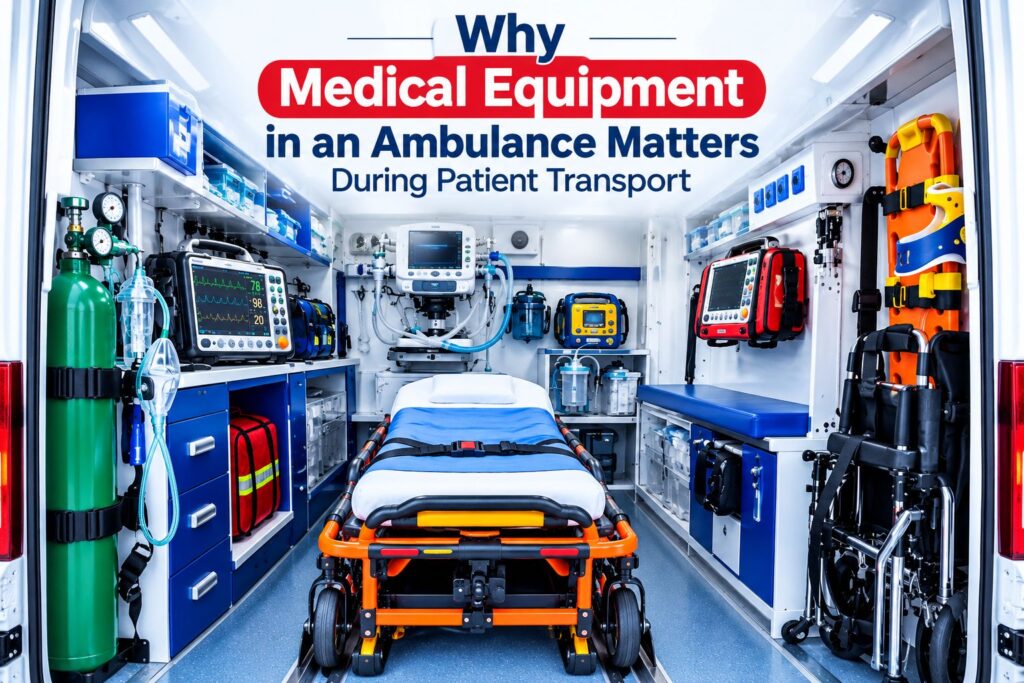
An ambulance is more than a vehicle used to take a patient from one place to another. Depending on the type of ambulance and level of care provided, it can carry medical equipment that allows trained professionals to assess, monitor, support, and safely transport patients.
The equipment required for one patient can be very different from what another patient needs. A stable patient being discharged from a hospital may primarily require a stretcher and basic monitoring, while a critically ill patient may need oxygen, cardiac monitoring, infusion support, or mechanical ventilation.
Understanding the role of ambulance equipment can help families ask the right questions when arranging medical transportation.
Why Ambulance Equipment Is Important
A patient’s condition can change during transportation. Appropriate equipment allows the medical team to monitor the patient and respond according to their clinical needs.
Depending on the ambulance type, equipment may support:
- Patient monitoring
- Oxygen delivery
- Airway management
- Safe patient movement
- Basic emergency care
- Cardiac monitoring
- Critical-care transportation
When requesting ambulance service zirakpur, tell the provider about the patient’s condition and medical requirements so an appropriate vehicle can be considered.
Oxygen Supply
Oxygen equipment is an important component of many medical ambulances.
Patients with certain respiratory or cardiac conditions may require supplemental oxygen during transportation.
An oxygen setup can include:
- Medical oxygen cylinders
- Oxygen masks
- Nasal cannulas
- Flow regulators
- Appropriate connecting equipment
The need for oxygen and its delivery should be based on the patient’s condition and medical guidance.
Our article Why Oxygen Ambulances Are Essential During Medical Emergencies explains oxygen-supported transportation in greater detail.
Pulse Oximeter
A pulse oximeter is used to measure oxygen saturation and pulse rate.
It can help medical personnel monitor changes in a patient’s oxygen level during transportation.
This may be particularly relevant for patients with:
- Respiratory problems
- Lung disease
- Certain cardiac conditions
- Existing oxygen requirements
Monitoring allows the medical team to recognize changes that may require further assessment or intervention.
Blood Pressure Monitor
Blood pressure is one of the vital signs commonly assessed during patient care.
Ambulance teams may monitor blood pressure in patients with conditions such as:
- Cardiac problems
- Stroke symptoms
- Trauma
- Weakness or dizziness
- Existing blood-pressure disorders
Repeated measurements can help healthcare professionals observe changes during transportation.
Stretcher
A stretcher is one of the most recognizable pieces of ambulance equipment.
It helps safely transport patients who:
- Cannot walk
- Are bedridden
- Have fractures
- Are recovering from surgery
- Have significant weakness
- Require limited movement
Modern stretcher systems are designed to secure patients during transportation and assist ambulance staff with safe movement.
Wheelchair Support
Not every patient requires a stretcher.
Some medically stable patients can sit but may be unable to walk safely because of age, injury, weakness, or reduced mobility.
Wheelchair assistance can be useful during:
- Hospital discharge
- Medical appointments
- Rehabilitation visits
- Elderly patient transfers
For more information about transporting older adults, read How Ambulance Services Help Senior Citizens Travel Safely.
Suction Equipment
Suction devices may be available in appropriately equipped ambulances to help trained medical personnel manage airway secretions when clinically required.
Airway management can be particularly important in patients whose condition affects their ability to maintain a clear airway.
The exact equipment available varies according to the type and level of ambulance.
Cardiac Monitor
More advanced ambulances may carry cardiac monitoring equipment.
This equipment allows trained medical personnel to observe heart activity and other relevant vital signs during transportation.
Patients requiring advanced cardiac monitoring may need a higher level of ambulance support rather than basic patient transport.
If you’re looking for professional ambulance chandigarh transportation, explain any cardiac or critical-care requirements when arranging the ambulance.
Defibrillator
Some emergency and advanced life-support ambulances carry defibrillators.
A defibrillator is a medical device used by appropriately trained professionals in specific cardiac emergencies.
Its presence is particularly relevant in ambulances intended to provide advanced emergency care.
However, the exact equipment available should always be confirmed with the ambulance provider when arranging a critical patient transfer.
Ventilator
A portable ventilator provides mechanical breathing support for patients who cannot maintain adequate breathing independently.
Ventilator-supported transportation may be required for some critically ill patients, including those already receiving mechanical ventilation in a hospital.
These patients require specialized equipment and appropriately trained medical professionals.
For a detailed explanation, read Understanding Ventilator Ambulances: When Are They Needed?
Infusion and Syringe Pumps
Certain critically ill patients require medication or fluids to be delivered at carefully controlled rates.
ICU-level ambulances may therefore include equipment such as:
- Infusion pumps
- Syringe pumps
- IV equipment
These devices are particularly relevant during critical-care and inter-hospital transfers.
Read How ICU Ambulances Provide Critical Care During Patient Transport to understand how advanced ambulance transportation differs from basic patient transport.
Immobilization Equipment
Patients with suspected fractures, spinal injuries, or trauma may require specialized equipment to reduce unnecessary movement.
Depending on the ambulance and clinical circumstances, this may include:
- Splints
- Cervical collars
- Immobilization devices
- Specialized stretchers
Proper patient handling is especially important after serious road accidents.
First-Aid Supplies
Ambulances can also carry essential first-aid materials such as:
- Dressings
- Bandages
- Gauze
- Gloves
- Basic wound-care supplies
These supplies help trained personnel provide appropriate initial care during transportation.
Not Every Ambulance Has the Same Equipment
One important point for families to understand is that ambulance equipment can vary significantly.
A Basic Life Support ambulance and an ICU ambulance are designed for different levels of patient care.
For example, a BLS ambulance may be appropriate for a stable patient requiring basic medical transportation, while a critically ill patient may require advanced monitoring, specialized medical equipment, or ventilator support.
Before booking, explain the patient’s medical condition rather than simply asking for “an ambulance.”
You can also read How to Choose the Right Ambulance for a Medical Emergency for guidance on selecting an appropriate service.
Equipment for Hospital Transfers
Patients being transferred between hospitals may require continuous treatment during transportation.
Before the journey, the treating team and ambulance provider should understand whether the patient requires:
- Oxygen
- Cardiac monitoring
- IV medication
- Ventilator support
- Stretcher transportation
- Other critical-care equipment
For patients requiring transportation to or from major Chandigarh hospitals, RESQ Ambulance also provides ambulance service near PGI Chandigarh and ambulance service near GMCH Sector 32 Chandigarh.
Equipment for Long-Distance Patient Transfers
Long-distance transportation requires additional planning because the patient may spend several hours in the ambulance.
The team may need to consider:
- Sufficient oxygen supply
- Backup medical equipment
- Patient monitoring
- Medication requirements
- Patient positioning
- Medical staff requirements
Our guide How Ambulance Services Support Patients During Long-Distance Transfers explains these considerations in more detail.
Questions to Ask Before Booking an Ambulance
When arranging patient transportation, ask what equipment is available and whether the ambulance is appropriate for the patient’s condition.
Useful questions include:
- Is oxygen available if required?
- Is a stretcher available?
- What patient monitoring equipment is onboard?
- Does the patient require an ICU ambulance?
- Is ventilator support available when medically required?
- What type of medical staff will accompany the patient?
Providing accurate information helps the ambulance provider understand the transportation requirements.
Preparing the Patient Before Transportation
Equipment is only one part of safe patient transportation. Families should also prepare important information before the ambulance arrives.
Keep ready:
- Medical reports
- Current medicines
- Doctor’s prescriptions
- Allergy information
- Identification documents
- Hospital details
Professional Patient Transportation Across the Region
Different medical situations require different levels of ambulance support.
RESQ Ambulance provides ambulance service mohali, panchkula ambulance, and ambulance kharar services for patients requiring emergency transportation, hospital transfers, discharge transportation, and other medically appropriate transfers.
When arranging an ambulance, clearly communicate the patient’s condition so the required level of care can be discussed.
Frequently Asked Questions
What equipment is commonly found in an ambulance?
Equipment varies by ambulance type but may include oxygen, stretchers, patient monitoring devices, first-aid supplies, suction equipment, and other emergency medical equipment.
Do all ambulances have ventilators?
No. Ventilators are generally associated with appropriately equipped critical-care or ventilator ambulances. Confirm availability before arranging transportation for a ventilator-dependent patient.
Why is oxygen important in an ambulance?
Some patients require supplemental oxygen during transportation because of their medical condition. Oxygen should be provided according to clinical need and appropriate medical guidance.
What is the difference between a BLS and ICU ambulance?
A BLS ambulance provides basic medical transportation and support, while an ICU ambulance is intended for patients requiring more advanced monitoring and critical-care equipment.
Should I ask about equipment before booking?
Yes. Explain the patient’s condition and ask whether the ambulance has the equipment and medical support required for safe transportation.
Conclusion
Medical equipment is an important part of professional ambulance transportation, but the appropriate equipment depends on the patient’s condition.
From stretchers and oxygen systems to advanced cardiac monitors and ventilators, different ambulance types provide different levels of support. Providing accurate medical information when arranging transportation helps ensure that the patient’s needs can be properly considered.
Families should focus on choosing an ambulance that matches the patient’s clinical requirements rather than selecting a vehicle based only on convenience.