
Medical emergencies involving severe breathing problems require specialized transportation. Patients who cannot breathe adequately on their own often depend on ventilator support to maintain oxygen levels until they reach a hospital or another healthcare facility.
A ventilator ambulance is specially designed to transport critically ill patients while providing continuous respiratory support. Equipped with advanced medical technology and managed by trained healthcare professionals, these ambulances function as mobile intensive care units.
Whether transporting patients between hospitals or responding to emergencies, ventilator ambulances play an important role in saving lives.
What Is a Ventilator Ambulance?
A ventilator ambulance is an advanced emergency vehicle equipped with a portable ventilator that assists or completely supports a patient’s breathing during transportation.
Unlike a standard ambulance, it includes critical care equipment capable of supporting patients who require continuous respiratory assistance.
If you’re searching for reliable ambulance zirakpur, RESQ Ambulance offers ventilator-equipped ambulances available 24×7 for emergency patient transportation.
How Does a Ventilator Work?
A ventilator delivers oxygen-rich air into the patient’s lungs while helping remove carbon dioxide from the body.
Healthcare professionals carefully adjust:
- Oxygen concentration
- Air pressure
- Breathing rate
- Air volume
These settings are based on the patient’s medical condition.
Continuous monitoring ensures the patient remains stable throughout the journey.
Who Needs a Ventilator Ambulance?
Doctors may recommend ventilator transportation for patients suffering from:
- Severe pneumonia
- Respiratory failure
- Head injuries
- Brain stroke
- Major trauma
- Heart failure
- Serious lung infections
- Multi-organ failure
- Patients already admitted to an ICU
- Post-operative critical care
These patients require uninterrupted respiratory support during transport.
Equipment Available in a Ventilator Ambulance
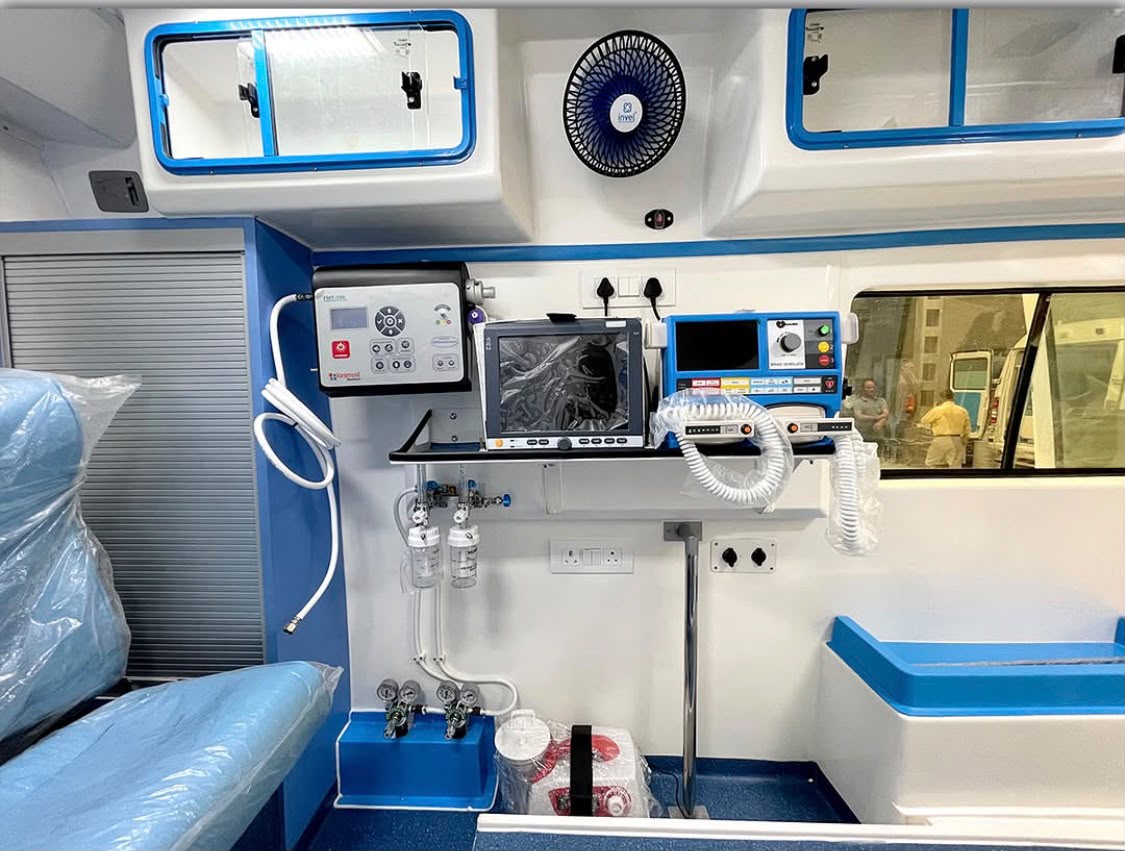
Modern ventilator ambulances include:
- Portable ventilator
- Cardiac monitor
- Defibrillator
- Oxygen cylinders
- Infusion pumps
- Suction machine
- Emergency medicines
- Pulse oximeter
- ECG monitor
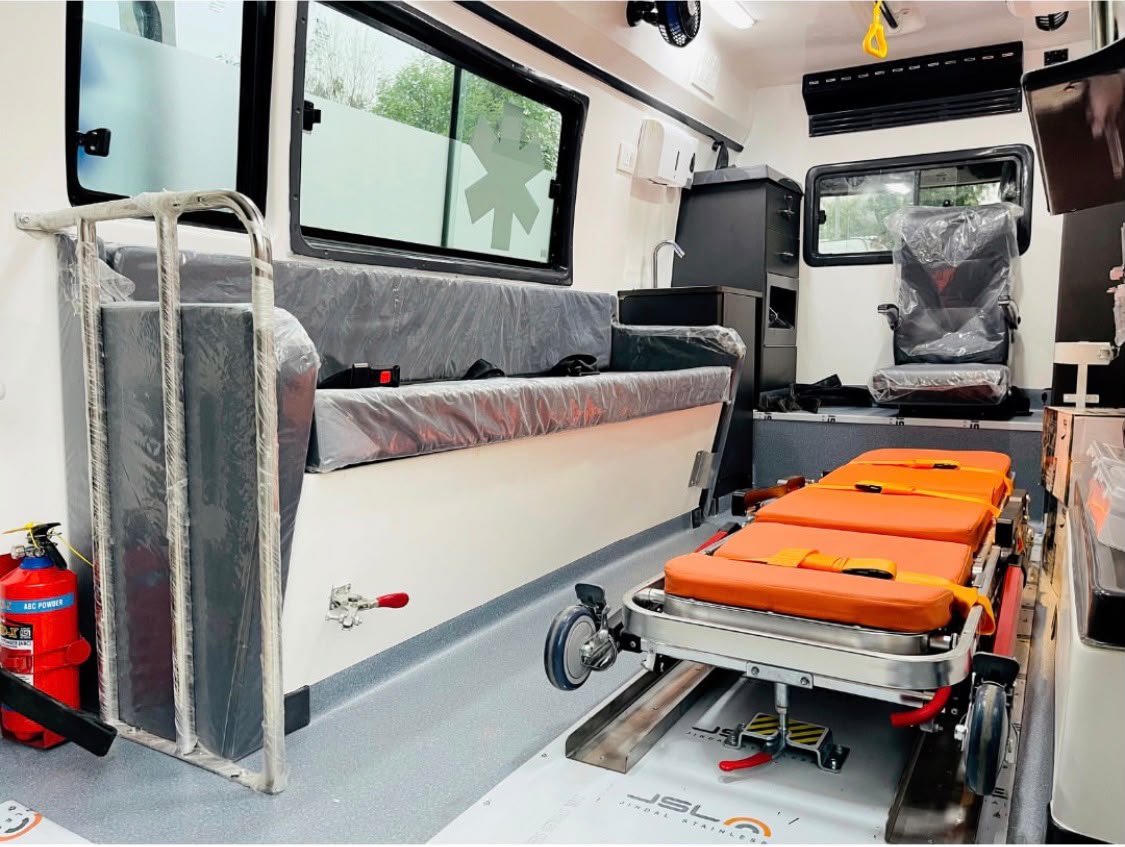
- Advanced stretcher system
This allows medical professionals to provide hospital-level care throughout the journey.
Continuous Medical Monitoring
Patients on ventilators require constant observation.
Medical professionals continuously monitor:
- Oxygen saturation
- Heart rate
- Blood pressure
- Respiratory rate
- ECG readings
- Airway pressure
Any sudden change is managed immediately by trained paramedics.
Safe Hospital-to-Hospital Transfers
Many critically ill patients need referral to hospitals offering specialized treatment.
Ventilator ambulances safely transport patients:
- Between hospitals
- From ICU to rehabilitation centers
- From hospital to home with critical care support
- To specialty cardiac hospitals
- To neurological centers
Treatment continues without interruption throughout the journey.
If you require dependable ambulance service in chandigarh, choosing a ventilator ambulance ensures advanced respiratory care during transportation.
Why Professional Ventilator Ambulances Matter
Attempting to transport ventilator-dependent patients in private vehicles is extremely dangerous.
Professional ventilator ambulances provide:
- Continuous breathing support
- Trained medical professionals
- Backup oxygen systems
- Emergency medicines
- Advanced monitoring
- Immediate intervention if complications occur
These services greatly reduce transportation risks.
Difference Between Oxygen Ambulance and Ventilator Ambulance
Although both provide respiratory support, they serve different purposes.
An oxygen ambulance supplies oxygen to patients who can still breathe independently.
A ventilator ambulance is intended for patients who cannot breathe adequately on their own and require mechanical breathing assistance.
If you’d like to understand oxygen-supported transportation in detail, read our blog Why Oxygen Ambulances Are Essential During Medical Emergencies.
ICU Ambulance vs Ventilator Ambulance
Many people assume these services are identical.
An ICU ambulance provides comprehensive intensive care during transport.
A ventilator ambulance specifically includes advanced respiratory support for patients who need mechanical ventilation.
Some ICU ambulances are also equipped with ventilators depending on the patient’s condition.
To understand the difference better, you can also read How ICU Ambulances Provide Critical Care During Patient Transport.
Benefits of Choosing a Ventilator Ambulance
Professional ventilator ambulance services provide:
- Continuous respiratory support
- Advanced monitoring
- Hospital-level equipment
- Experienced critical care staff
- Safe patient handling
- Faster emergency response
- Better patient outcomes
These advantages make ventilator ambulances essential for critically ill patients.
When Should You Call a Ventilator Ambulance?
Doctors commonly recommend ventilator transportation for:
- ICU referrals
- Critical respiratory illness
- Brain injury
- Severe chest trauma
- Organ failure
- Long-distance critical patient transfers
Early planning ensures the patient receives uninterrupted care throughout transportation.
RESQ Ambulance also provides reliable ambulance service in mohali, trusted ambulance service in panchkula, and prompt ambulance number in kharar for advanced critical care transportation across the Tricity region.
Frequently Asked Questions
What is a ventilator ambulance?
A ventilator ambulance is an advanced ambulance equipped with a portable ventilator that provides breathing support during patient transportation.
Who needs a ventilator ambulance?
Patients with respiratory failure, severe pneumonia, brain injury, trauma, or ICU-level medical conditions often require ventilator-supported transportation.
Can ventilator ambulances transfer patients between hospitals?
Yes. They are commonly used for inter-hospital transfers while maintaining continuous respiratory support.
Is medical staff available during transport?
Yes. Ventilator ambulances are staffed by trained paramedics and critical care professionals.
Is a ventilator ambulance different from an oxygen ambulance?
Yes. Oxygen ambulances provide oxygen support, while ventilator ambulances mechanically assist or control breathing for critically ill patients.
Conclusion
Ventilator ambulances provide one of the highest levels of medical transportation available. Equipped with advanced respiratory equipment, continuous monitoring systems, and experienced healthcare professionals, they ensure critically ill patients receive uninterrupted care throughout the journey.
For patients requiring mechanical breathing support, choosing a professional ventilator ambulance can make a life-saving difference.