
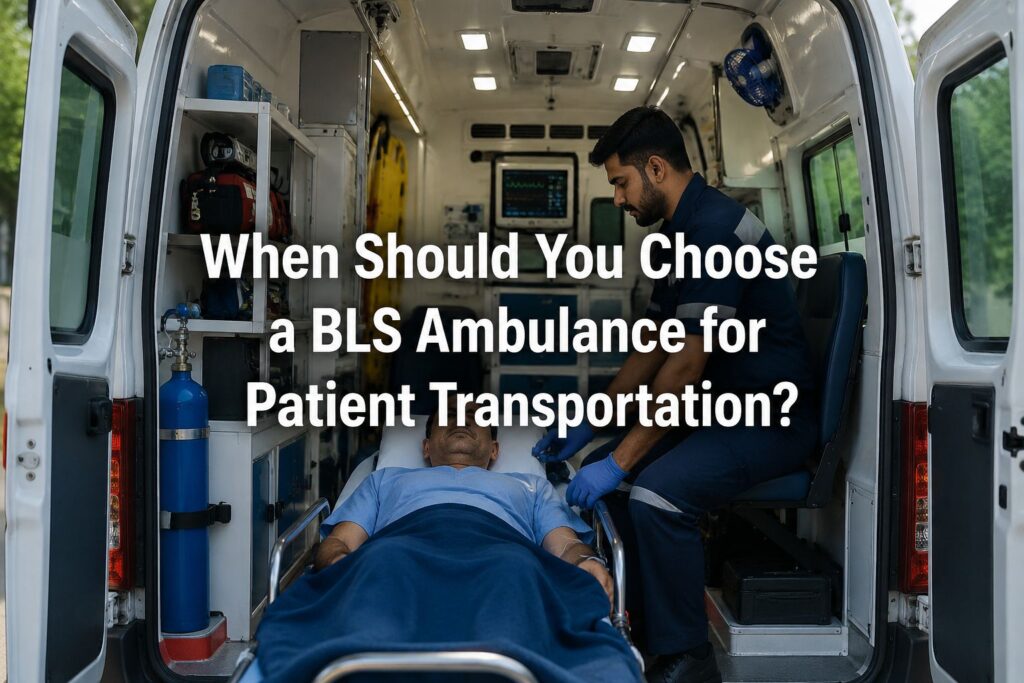
Not every patient requires an ICU or ventilator ambulance. For patients who are medically stable but still need professional assistance during transportation, a Basic Life Support ambulance can be an appropriate option.
BLS ambulances are designed to provide essential medical support while transporting patients to hospitals, clinics, diagnostic centers, rehabilitation facilities, or their homes. They are especially useful when a patient cannot safely travel in a private vehicle but does not require advanced intensive care equipment.
Understanding when a BLS ambulance is appropriate can help families choose the right type of medical transportation without unnecessary delays.
What Is a BLS Ambulance?
A Basic Life Support ambulance is equipped to provide essential emergency medical care and safe patient transportation.
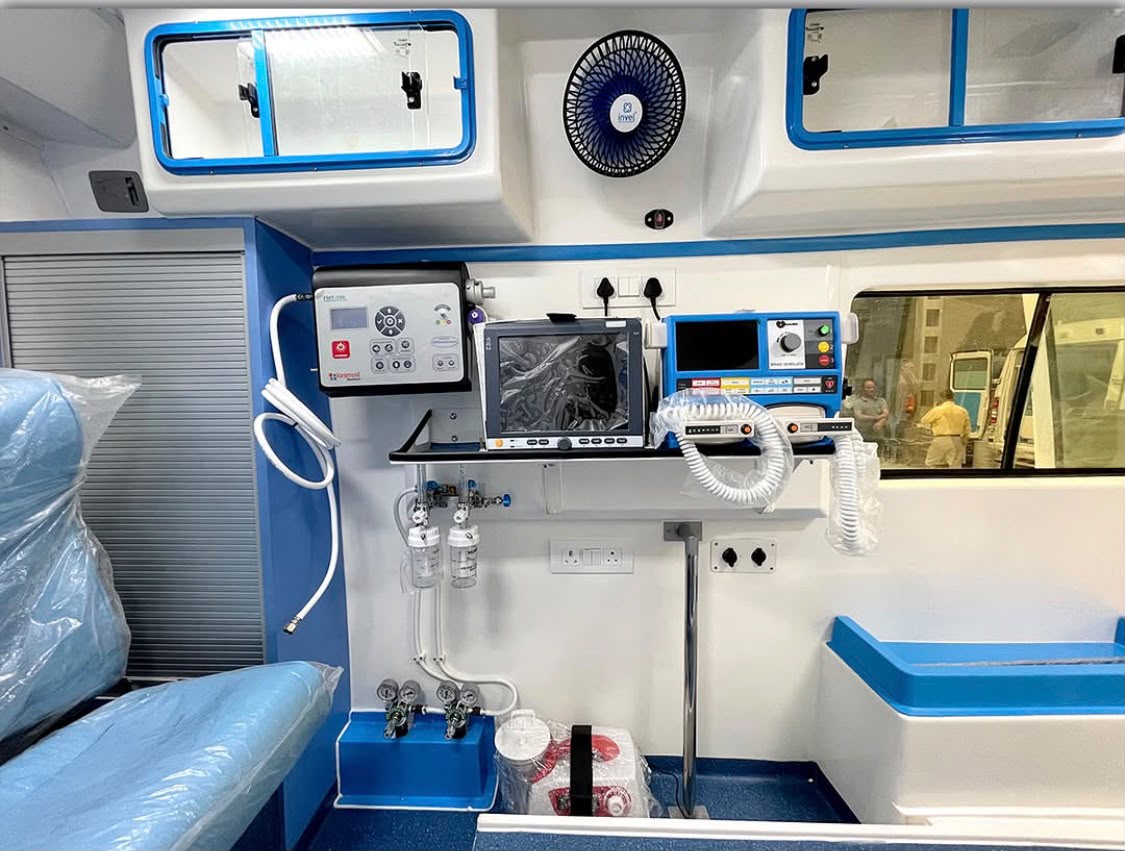
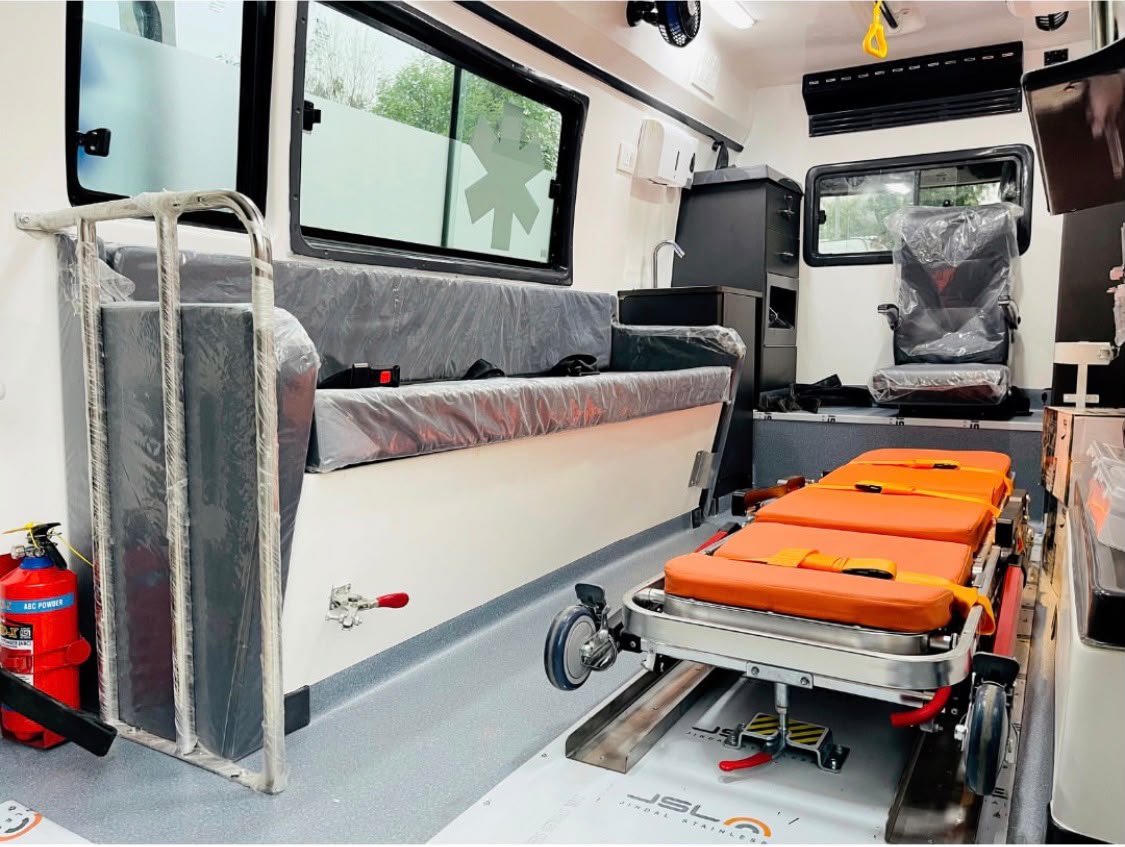
Depending on the patient’s condition and service provider, a BLS ambulance may include equipment such as:
- Stretcher
- Wheelchair
- Oxygen supply
- First-aid equipment
- Basic monitoring equipment
- Emergency medical supplies
- Patient safety equipment
The ambulance is operated by trained emergency medical personnel who can assist the patient during transportation.
For patients who need reliable ambulance number in zirakpur, RESQ Ambulance provides professional patient transportation and emergency ambulance support.
When Is a BLS Ambulance Suitable?
A BLS ambulance may be suitable when a patient needs medical transportation but does not require advanced life support.
Common situations include:
- Hospital discharge
- Routine hospital transfers
- Elderly patient transportation
- Bedridden patient movement
- Non-critical injuries
- Stable patients requiring oxygen
- Transfers to diagnostic centers
- Rehabilitation transportation
- Scheduled medical appointments
The patient’s medical condition should always determine the appropriate ambulance type.
Hospital Discharge Transportation
Patients may be medically stable enough to leave the hospital but unable to travel comfortably in a regular car.
This can happen after:
- Surgery
- Fracture treatment
- Stroke recovery
- Prolonged hospitalization
- Serious illness
- Medical procedures
A BLS ambulance provides a safer alternative by allowing the patient to travel on a stretcher or wheelchair with professional assistance.
You can also read our previous guide, Hospital Discharge Ambulance: When and Why You Need One, for more information about safe hospital-to-home transportation.
Transportation for Elderly Patients
Older adults may have difficulty getting into a private vehicle, sitting for long periods, or walking without assistance.
A BLS ambulance can provide appropriate support for elderly patients who need transportation for medical purposes.
Professional staff can assist with:
- Moving the patient from bed to stretcher
- Safe entry and exit
- Wheelchair transfers
- Comfortable positioning
- Basic medical observation
For additional information, see How Ambulance Services Help Senior Citizens Travel Safely.
Support for Bedridden Patients
Bedridden patients should not be forced to travel in uncomfortable positions.
A BLS ambulance can provide stretcher-based transportation, reducing unnecessary movement and physical strain.
This can be particularly useful for patients recovering at home who need to visit a hospital or diagnostic facility.
Oxygen Support During Transportation
Some medically stable patients require supplemental oxygen while traveling.
An ambulance with oxygen support can help maintain the patient’s prescribed oxygen therapy during transportation.
Patients with respiratory or cardiac conditions may require oxygen, but the exact level of support should be determined by their healthcare provider.
For more information, read Why Oxygen Ambulances Are Essential During Medical Emergencies.
BLS Ambulance for Hospital Transfers
Patients sometimes need to move from one healthcare facility to another for consultation, testing, or treatment.
A BLS ambulance can be appropriate when the patient is stable and does not require intensive care during the transfer.
For patients traveling to major healthcare facilities, RESQ Ambulance also provides Ambulance Service Near PGI Chandigarh and Ambulance Service Near GMCH Sector 32 Chandigarh.
When a BLS Ambulance May Not Be Enough
A BLS ambulance may not be appropriate for patients who require advanced medical intervention during transportation.
An ICU, ALS, or ventilator ambulance may be considered for patients who require:
- Mechanical ventilation
- Advanced cardiac monitoring
- Intensive care
- Continuous critical medication
- Advanced airway management
- Complex life-support equipment
The ambulance provider should be informed about the patient’s condition before transportation so the appropriate vehicle and equipment can be arranged.
You can also read How ICU Ambulances Provide Critical Care During Patient Transport and Understanding Ventilator Ambulances: When Are They Needed?
BLS Ambulance vs Private Vehicle
A private vehicle may not be suitable for patients who require stretcher transportation, oxygen, or medical assistance.
A BLS ambulance provides important advantages such as:
- Professional patient handling
- Stretcher transportation
- Medical equipment
- Oxygen availability
- Trained medical personnel
- Safer entry and exit
- Medical observation during the journey
This makes a BLS ambulance a practical option for many stable patients.
If you need dependable ambulance chandigarh, professional ambulance transportation can help patients travel safely while receiving appropriate medical assistance.
Preparing Before the Ambulance Arrives
Families can make the transportation process smoother by preparing in advance.
Keep the following ready:
- Medical reports
- Prescriptions
- Identification documents
- Current medications
- Doctor’s instructions
- Receiving hospital details
Also inform the ambulance team about any mobility limitations or special requirements.
For a complete preparation checklist, read How to Prepare a Patient for Safe Ambulance Transportation.
Choosing the Right Ambulance
Before booking an ambulance, consider:
- Is the patient medically stable?
- Does the patient need oxygen?
- Can the patient sit safely?
- Does the patient need a stretcher?
- Does the patient require continuous monitoring?
- Has the doctor recommended advanced medical transportation?
Providing accurate information helps the ambulance provider arrange the appropriate service.
RESQ Ambulance also provides kharar ambulance, ambulance service mohali, and ambulance service panchkula for patient transportation and emergency medical support across the region.
Frequently Asked Questions
What does BLS mean in an ambulance?
BLS stands for Basic Life Support. A BLS ambulance provides essential emergency medical support and patient transportation for patients who do not require advanced intensive care.
Who can use a BLS ambulance?
Stable patients who need stretcher transportation, wheelchair assistance, oxygen support, or professional medical transportation may be suitable for BLS ambulance services.
Can a BLS ambulance transport elderly patients?
Yes. BLS ambulances can provide safe transportation for elderly patients who require assistance during medical travel.
Can a BLS ambulance provide oxygen?
Oxygen-equipped BLS ambulances can provide supplemental oxygen when required. Patients should inform the ambulance provider about their oxygen needs before booking.
Is BLS suitable for ventilator patients?
Generally, ventilator-dependent patients require a specialized ventilator or ICU ambulance equipped for advanced respiratory support.
Conclusion
Choosing the right ambulance is important for safe patient transportation. A BLS ambulance can be a practical option for medically stable patients who require professional assistance, stretcher transportation, oxygen support, or basic medical monitoring.
Before booking, always provide accurate information about the patient’s condition and medical requirements. This helps ensure the ambulance team is prepared with the appropriate equipment and support.
For patients requiring advanced critical care, specialized ICU or ventilator ambulance services may be more appropriate.