
Sometimes a patient needs treatment that is not available at the hospital where they are currently admitted. Doctors may recommend transferring the patient to another healthcare facility for specialist consultation, surgery, advanced diagnostics, intensive care, or other medical treatment.
A hospital-to-hospital ambulance transfer allows the patient to travel safely while receiving appropriate medical support throughout the journey. Depending on the patient’s condition, the transfer may require a basic ambulance, oxygen support, ICU-level care, or ventilator assistance.
For families, arranging a hospital transfer can feel stressful. Understanding how the process works can make the transfer more organized and help ensure that the patient receives appropriate care during transportation.
What Is a Hospital-to-Hospital Ambulance Transfer?
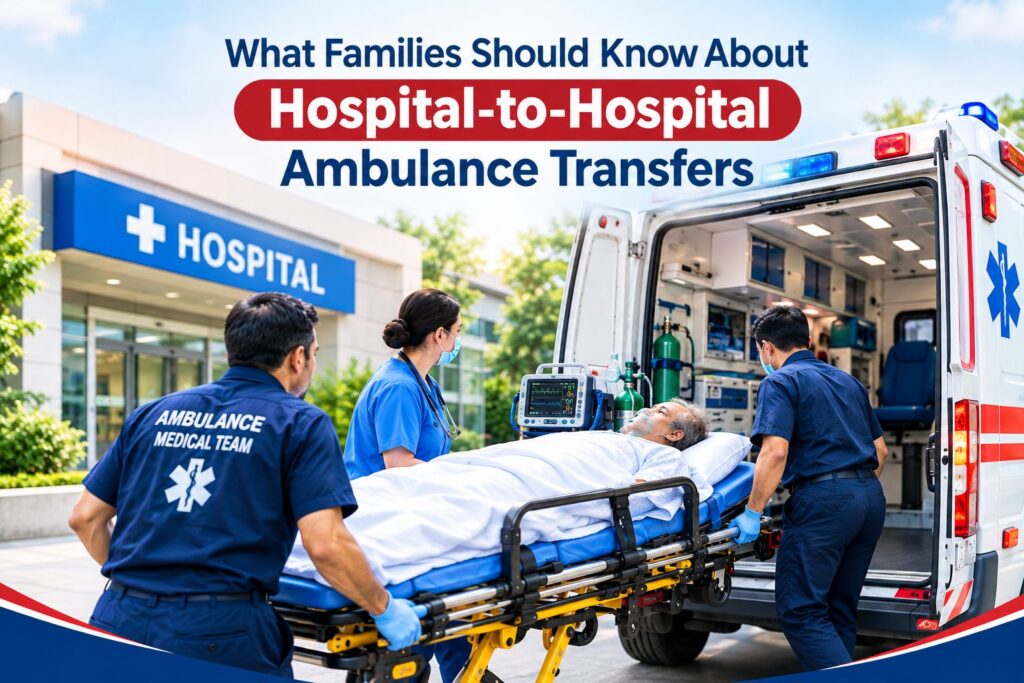
A hospital-to-hospital ambulance transfer is the medically supervised transportation of a patient from one healthcare facility to another.
Transfers may be arranged for:
- Specialist treatment
- Surgery
- ICU admission
- Advanced diagnostic tests
- Cardiac treatment
- Neurological care
- Cancer treatment
- Rehabilitation
- Availability of specialized medical equipment
The ambulance team transports the patient while providing the level of medical support required for their condition.
Why Do Patients Need Hospital Transfers?
A doctor may recommend a transfer when the current hospital does not have the required treatment or facilities.
Common reasons include:
- Need for a specialist
- Requirement for advanced surgery
- Need for intensive care
- Availability of a specialized department
- Requirement for a ventilator
- Need for advanced diagnostic equipment
- Transfer to a hospital closer to the patient’s family
The treating doctor generally determines whether a transfer is medically appropriate.
Choosing the Correct Ambulance
The ambulance should match the patient’s medical condition.
A stable patient may require a Basic Life Support ambulance, while a critically ill patient may require an ICU or ventilator ambulance.
Available options may include:
- BLS Ambulance
- ALS Ambulance
- Oxygen Ambulance
- ICU Ambulance
- Ventilator Ambulance
If you’re looking for dependable ambulance zirakpur, make sure the provider knows the patient’s condition before dispatching the vehicle.
Basic Life Support Transfers
A BLS ambulance can be suitable for patients who are medically stable but cannot safely travel in a private vehicle.
It may be used for:
- Stable hospital transfers
- Elderly patients
- Bedridden patients
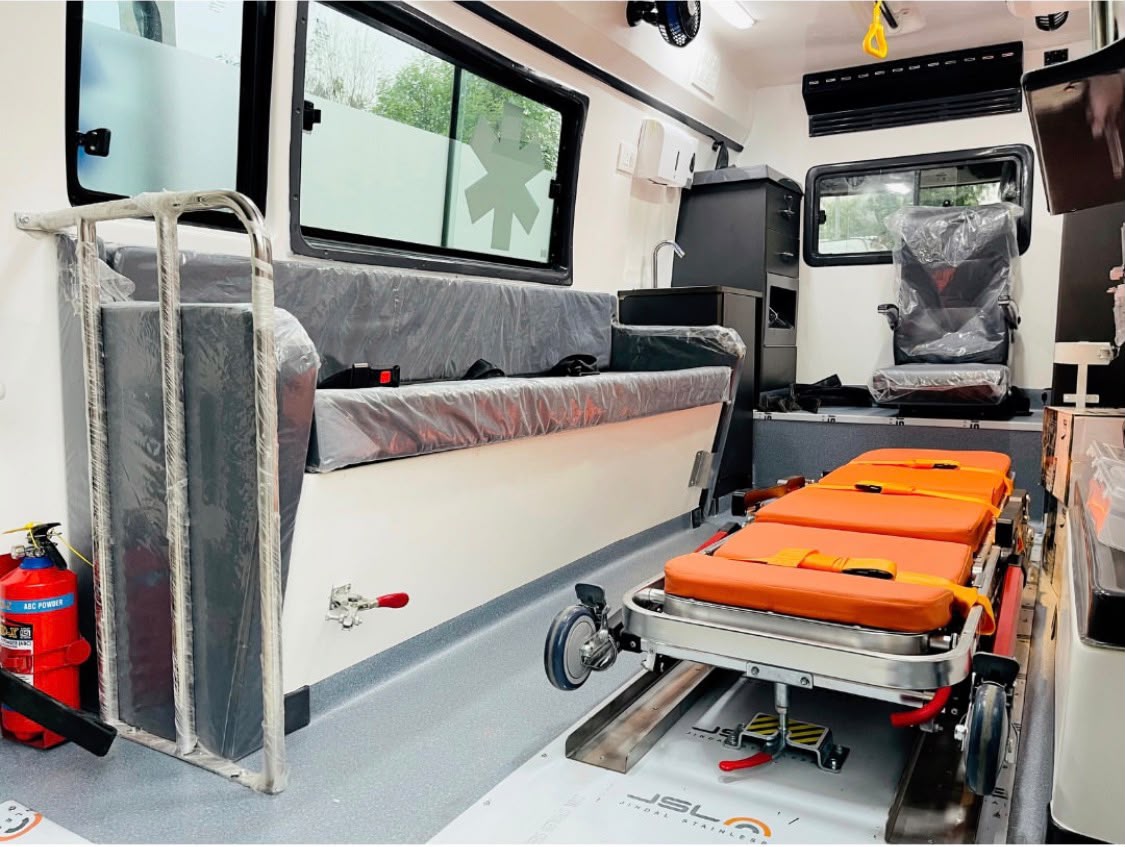
- Patients requiring stretcher transportation
- Certain post-operative patients
- Patients requiring basic monitoring
For more information, read our previous blog When Should You Choose a Basic Life Support Ambulance?
Oxygen-Supported Transfers
Some patients can travel safely but require supplemental oxygen during the journey.
An oxygen-equipped ambulance can provide continuous oxygen support as required.
Patients with certain respiratory or cardiac conditions may need this type of transportation.
Our blog Why Oxygen Ambulances Are Essential During Medical Emergencies explains more about oxygen-supported patient transportation.
ICU Ambulance Transfers
Critically ill patients may require advanced medical support while being moved between hospitals.
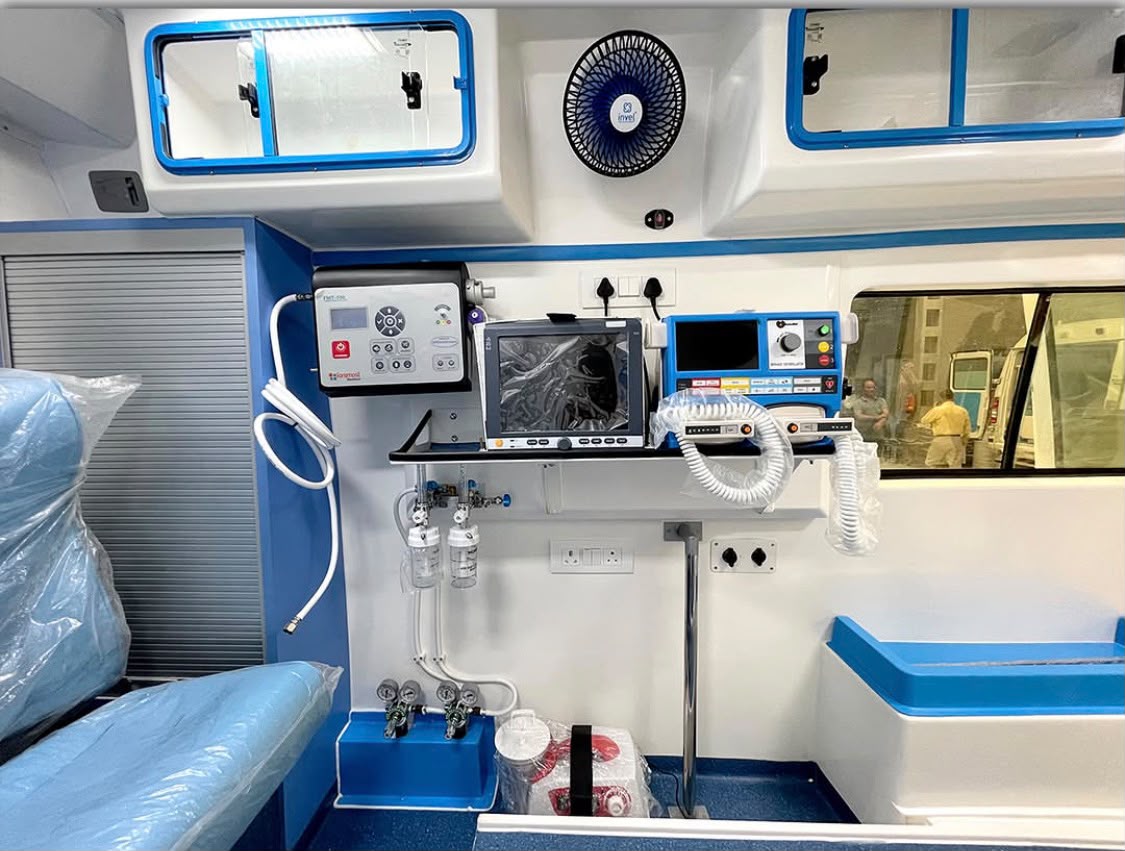
An ICU ambulance can be equipped with equipment such as:
- Cardiac monitors
- Defibrillators
- Infusion pumps
- Oxygen systems
- Ventilators
- Emergency medical equipment
The level of equipment depends on the patient’s requirements.
You can also read How ICU Ambulances Provide Critical Care During Patient Transport to understand how critical-care transportation works.
Ventilator Ambulance Transfers
Patients who depend on mechanical ventilation require specialized transportation.
A ventilator ambulance can provide respiratory support throughout the journey while medical professionals monitor the patient’s condition.
Patients with severe respiratory problems or certain critical conditions may require this level of support.
For additional information, read Understanding Ventilator Ambulances: When Are They Needed?
Coordination Between Hospitals
A successful hospital transfer requires coordination between the sending and receiving hospitals.
Before transportation, the hospitals may need to coordinate:
- Patient medical records
- Doctor-to-doctor communication
- Receiving department
- Bed availability
- Required equipment
- Treatment information
Families should confirm that the receiving hospital is prepared to accept the patient before leaving the first facility.
What Information Should Families Provide?
When booking an ambulance, provide accurate information about the patient.
Important details include:
- Patient’s age
- Medical condition
- Current diagnosis
- Consciousness level
- Oxygen requirement
- Ventilator requirement
- Mobility
- Pickup hospital
- Destination hospital
Accurate information helps the ambulance provider arrange suitable medical support.
Keep Medical Documents Ready
Families should collect important documents before transportation.
These may include:
- Discharge summary
- Doctor’s referral
- Prescriptions
- Blood reports
- Imaging reports
- Previous medical records
- Current medication list
- Allergy information
- Identification documents
Keeping these documents organized can help doctors at the receiving hospital understand the patient’s medical history more quickly.
Prepare the Patient for Transportation
Before the ambulance arrives, follow the instructions provided by the treating medical team.
If the patient is stable enough for preparation, keep essential personal items ready and make sure the patient is dressed comfortably.
For a detailed checklist, read How to Prepare a Patient for Safe Ambulance Transportation.
Medical Monitoring During the Journey
Patient monitoring is particularly important during hospital transfers.
Depending on the ambulance type and patient’s condition, medical staff may monitor:
- Heart rate
- Blood pressure
- Oxygen saturation
- Respiratory rate
- ECG
- General condition
If the patient’s condition changes, trained medical staff can respond according to their training and available equipment.
Transfers to Major Healthcare Facilities
Patients may need to travel to specialized hospitals for advanced treatment.
When transportation is required around major healthcare facilities, RESQ Ambulance also provides ambulance service near PGI Chandigarh and ambulance service near GMCH Sector 32 Chandigarh.
This can be particularly useful for patients requiring planned transfers, emergency transportation, specialist consultations, or hospital-related patient movement.
Long-Distance Hospital Transfers
Not every hospital transfer is within the same city. Some patients need to travel to another city or state for specialized treatment.
Long-distance transfers require additional planning.
Families should consider:
- Patient stability
- Travel distance
- Required medical equipment
- Oxygen requirements
- Medication requirements
- Medical staff
- Destination hospital arrangements
Our previous article How Ambulance Services Support Patients During Long-Distance Transfers provides additional information about intercity medical transportation.
Why Private Vehicles May Not Be Suitable
A private vehicle may be unsuitable for patients who need medical support during transportation.
A private car generally cannot provide:
- Medical oxygen
- Patient monitoring
- Stretcher transportation
- Emergency equipment
- Ventilator support
- Trained medical personnel
For patients with significant medical needs, professional ambulance transportation provides a safer alternative.
If you’re searching for reliable ambulance service in chandigarh, discuss the patient’s condition with the ambulance provider before booking.
How Families Can Reduce Transfer Delays
A few preparations can make the transfer process smoother.
Before the ambulance arrives:
- Confirm the destination hospital.
- Complete required hospital paperwork.
- Collect medical records.
- Keep medications ready.
- Tell the ambulance provider about special requirements.
- Keep the patient’s belongings organized.
- Confirm that the receiving hospital is prepared.
Good preparation can reduce unnecessary delays.
What Happens After Reaching the Hospital?
Once the ambulance reaches the destination, the patient is transferred to the appropriate hospital department.
The medical team may receive information about:
- Patient’s condition
- Vital signs
- Treatment provided during transportation
- Medications administered
- Oxygen or ventilator settings
- Important medical history
This information supports continuity of care.
Benefits of Professional Hospital Transfer Ambulances
Professional ambulance transportation can provide:
- Safe patient handling
- Medical supervision
- Appropriate emergency equipment
- Oxygen support
- Critical-care support when required
- Stretcher transportation
- Continuous monitoring
- Better coordination during transfers
The most important consideration is selecting an ambulance that matches the patient’s actual medical requirements.
RESQ Ambulance also provides ambulance service mohali, ambulance service in panchkula, and ambulance service kharar for hospital transfers, emergency transportation, patient discharge, and other medical transportation needs.
Frequently Asked Questions
Why would a patient need to be transferred to another hospital?
A patient may need a transfer when another hospital has specialized doctors, equipment, surgery facilities, ICU beds, or treatment options that are not available at the current facility.
Which ambulance is suitable for a hospital transfer?
The appropriate ambulance depends on the patient’s condition. Stable patients may need BLS transportation, while critically ill patients may require an ICU or ventilator ambulance.
Can oxygen be provided during a hospital transfer?
Yes. Oxygen-equipped ambulances can provide supplemental oxygen during transportation when medically required.
Can ICU patients be transferred between hospitals?
Yes. ICU patients can be transferred using appropriately equipped critical-care ambulances with trained medical professionals.
What documents should I carry during a hospital transfer?
Keep medical records, prescriptions, referral documents, diagnostic reports, medication details, allergy information, and identification documents ready.
Conclusion
Hospital-to-hospital ambulance transfers require careful planning and appropriate medical support. The ambulance should be selected according to the patient’s condition, required equipment, level of monitoring, and travel distance.
By coordinating with both hospitals, preparing medical documents, informing the ambulance provider about the patient’s needs, and choosing the appropriate level of medical transportation, families can help make the transfer safer and more organized.
Professional ambulance transportation provides patients with medical support during the journey and helps ensure continuity of care from one healthcare facility to another.