
Choosing the right ambulance during a medical emergency can be confusing, especially when a patient needs immediate transportation. Different medical conditions require different levels of care, and selecting an ambulance based only on availability may not always be appropriate.
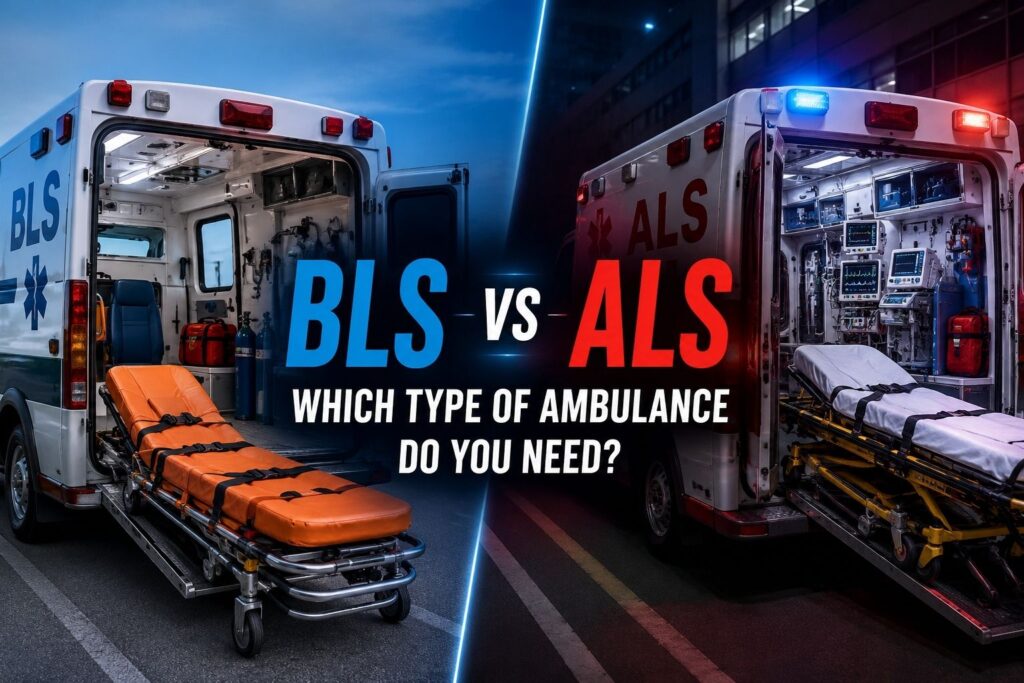
Basic Life Support (BLS) and Advanced Life Support (ALS) ambulances are designed for different patient requirements. Understanding the difference can help families make a better decision when arranging emergency transportation or a hospital transfer.
The right ambulance should be selected according to the patient’s condition, medical needs, and the level of support required during transportation.
What Is a BLS Ambulance?
A Basic Life Support ambulance is designed to provide essential emergency medical care and safe transportation for patients who do not require advanced life-support interventions.
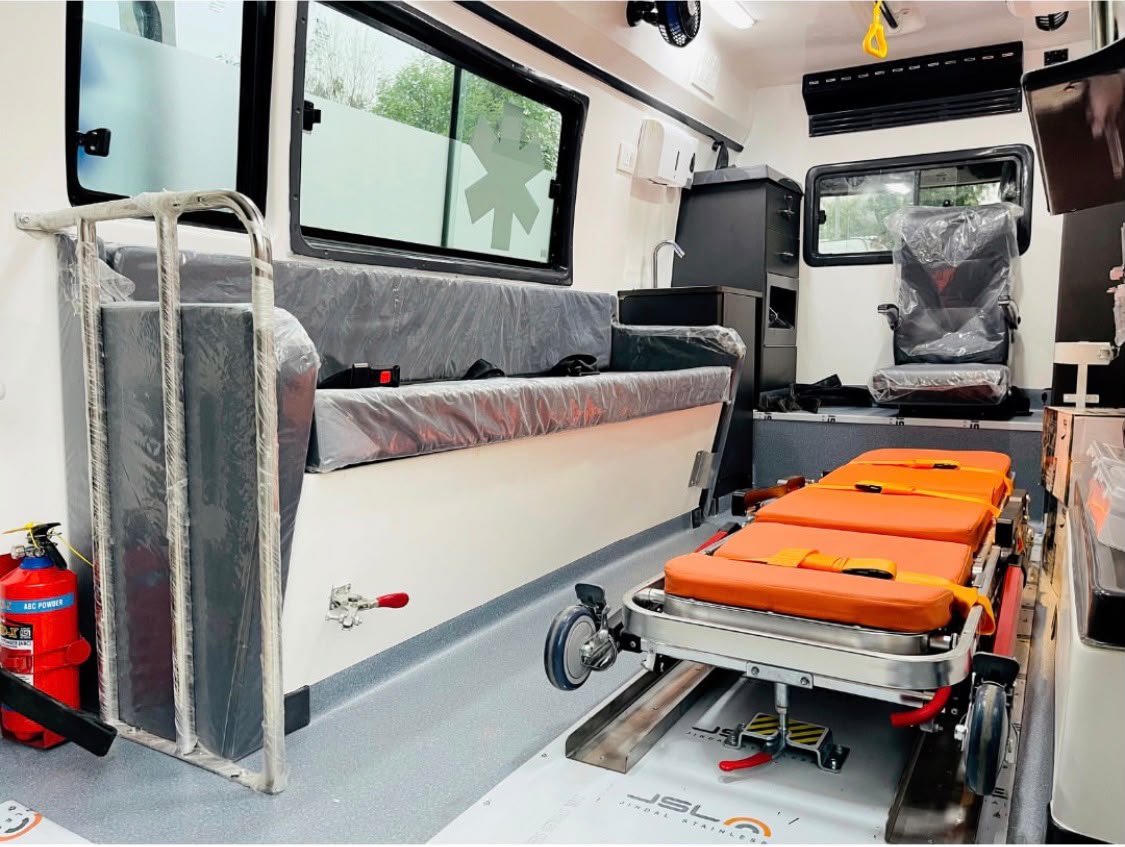
BLS ambulances commonly provide:
- Oxygen support
- First-aid treatment
- Patient monitoring
- CPR support
- Basic emergency equipment
- Stretcher transportation
- Basic airway management
BLS ambulances are commonly used for stable patients, non-critical emergencies, hospital discharges, and patient transfers.
For patients requiring dependable ambulance zirakpur, selecting the appropriate level of ambulance support can help ensure a safe journey.
What Is an ALS Ambulance?
An Advanced Life Support ambulance provides a higher level of medical care for patients with serious or potentially life-threatening conditions.
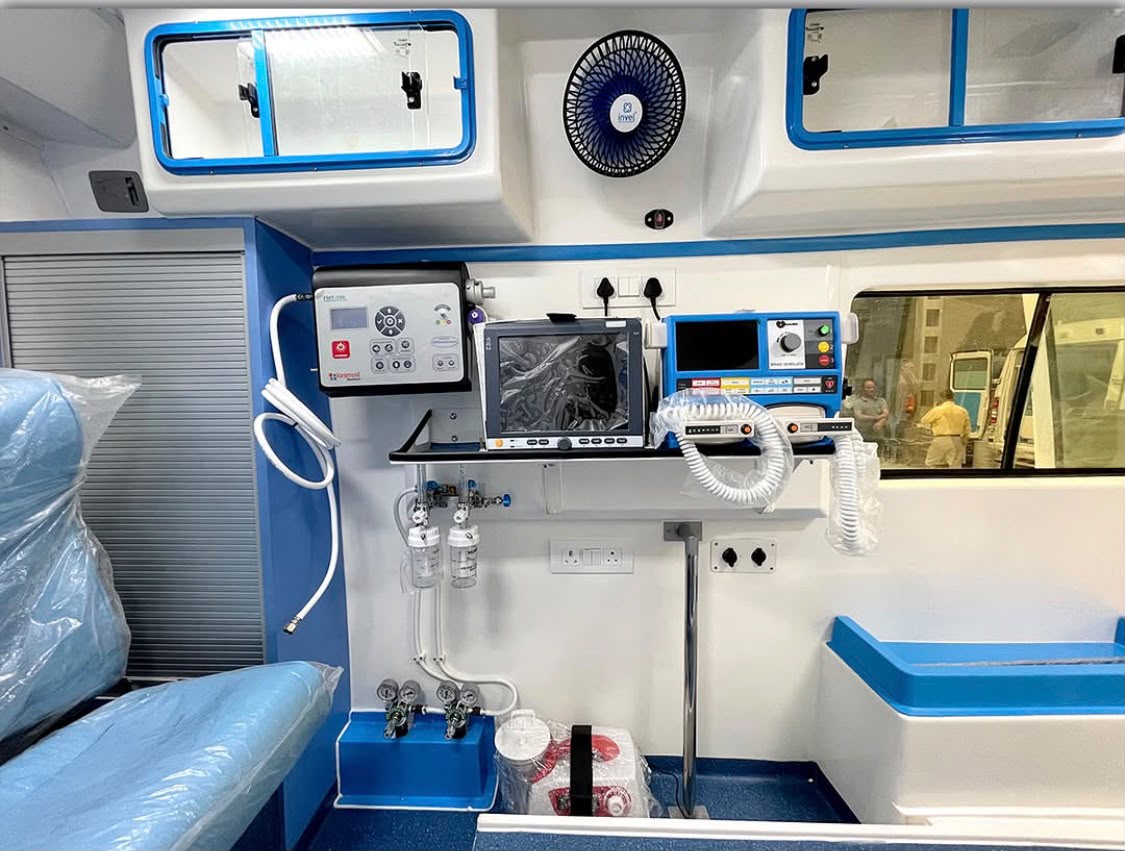
ALS ambulances may include advanced equipment such as:
- Cardiac monitors
- Defibrillators
- Advanced airway equipment
- Infusion pumps
- Emergency medications
- Advanced monitoring systems
- Advanced resuscitation equipment
ALS transportation is generally intended for patients who require closer medical supervision during the journey.
BLS vs ALS: The Main Difference
The primary difference is the level of medical care and equipment available during transportation.
A BLS ambulance focuses on basic emergency care and safe transportation.
An ALS ambulance is designed for patients who may require advanced medical intervention during the journey.
The appropriate choice should depend on the patient’s condition rather than simply choosing the most advanced ambulance available.
When Is a BLS Ambulance Suitable?
A BLS ambulance may be appropriate for patients who are medically stable but require professional transportation.
Examples include:
- Hospital discharge
- Routine patient transfer
- Stable elderly patients
- Non-critical injuries
- Wheelchair or stretcher transportation
- Stable patients attending medical appointments
A doctor or healthcare professional can help determine whether BLS transportation is appropriate.
When Is an ALS Ambulance Required?
ALS transportation may be necessary when a patient has a serious medical condition requiring advanced monitoring or intervention.
Situations can include:
- Severe breathing difficulties
- Serious cardiac problems
- Unstable vital signs
- Severe trauma
- Certain stroke emergencies
- Serious allergic reactions
- Patients requiring advanced airway support
If there is uncertainty about the patient’s condition, explain the situation clearly to the ambulance provider so the appropriate level of medical support can be arranged.
Oxygen Ambulance vs BLS Ambulance
An oxygen ambulance focuses on providing supplemental oxygen to patients who require respiratory support.
A BLS ambulance provides a broader range of basic emergency care and transportation services.
Some BLS ambulances may also carry oxygen equipment, depending on their configuration.
For more information about oxygen-supported transportation, read Why Oxygen Ambulances Are Essential During Medical Emergencies.
ALS Ambulance vs ICU Ambulance
An ALS ambulance provides advanced emergency medical support.
An ICU ambulance is designed for patients who require intensive monitoring and critical-care support during transportation.
Patients on ventilators or requiring complex life-support systems may need an ICU-level ambulance rather than standard BLS transportation.
Our previous article How ICU Ambulances Provide Critical Care During Patient Transport explains this type of medical transportation in more detail.
What Equipment Should You Expect?
The exact equipment can vary between ambulance providers and ambulance types.
Depending on the service, equipment may include:
- Oxygen cylinders
- Pulse oximeters
- Blood pressure monitors
- Cardiac monitors
- Defibrillators
- Suction equipment
- Emergency medicines
- Stretchers
- Wheelchairs
- Ventilators
Before booking, families should explain the patient’s medical condition and ask whether the ambulance has the equipment required.
Why Patient Condition Matters
The same ambulance may not be suitable for every patient.
For example, a stable patient being discharged after treatment may only need stretcher transportation and basic monitoring.
A patient with unstable vital signs may require advanced monitoring and emergency intervention.
A patient dependent on mechanical ventilation requires specialized respiratory support.
This is why ambulance selection should always be based on medical requirements.
Hospital Transfers May Require Different Levels of Care
Patients transferred between hospitals may have very different needs.
A stable patient could require BLS transportation, while a critically ill patient may require ALS or ICU support.
Before arranging the transfer, discuss the patient’s condition with the treating doctor and ambulance provider.
This is particularly important when transferring patients to major medical centers. Patients requiring transportation near major hospitals can also use our Ambulance Service Near PGI Chandigarh and Ambulance Service Near GMCH Sector 32 Chandigarh.
What Information Should You Give the Ambulance Provider?
When booking an ambulance, provide accurate information about:
- Patient’s age
- Current medical condition
- Consciousness
- Breathing condition
- Oxygen requirement
- Mobility
- Recent surgery
- Existing medical conditions
- Destination hospital
Clear information helps the provider determine which ambulance and equipment may be appropriate.
If you’re searching for reliable ambulance service in chandigarh, make sure the provider understands the patient’s medical requirements before dispatching the vehicle.
Choosing an Ambulance for Elderly Patients
Senior citizens may require additional assistance even when their condition is stable.
Patients with limited mobility may benefit from:
- Stretcher support
- Wheelchair assistance
- Oxygen availability
- Trained medical staff
- Comfortable transportation
You can also read How Ambulance Services Help Senior Citizens Travel Safely for more information about elderly patient transportation.
Choosing an Ambulance for Long-Distance Transfers
Long-distance transportation requires additional planning.
Consider:
- Patient’s medical condition
- Travel distance
- Oxygen requirements
- Required medical equipment
- Number of attendants
- Availability of medical staff
Our article How Ambulance Services Support Patients During Long-Distance Transfers covers important considerations for intercity patient transportation.
RESQ Ambulance provides ambulance service mohali, ambulance service in panchkula, and ambulance number in kharar for patients requiring emergency and medical transportation across the region.
BLS or ALS: How Do You Decide?
A simple approach is to consider the patient’s current condition.
BLS may be suitable when:
The patient is stable and primarily requires safe transportation with basic medical support.
ALS may be suitable when:
The patient has an unstable or potentially life-threatening condition and may require advanced emergency care during transportation.
ICU transportation may be required when:
The patient needs intensive monitoring, ventilator support, or other critical-care interventions.
When in doubt, contact a professional ambulance provider and explain the patient’s condition before selecting the ambulance.
Frequently Asked Questions
What does BLS stand for?
BLS stands for Basic Life Support. BLS ambulances provide essential emergency medical care and transportation for patients who do not require advanced life-support interventions.
What does ALS stand for?
ALS stands for Advanced Life Support. ALS ambulances provide advanced emergency equipment and medical support for patients with more serious conditions.
Is an ALS ambulance always better than a BLS ambulance?
Not necessarily. The correct ambulance depends on the patient’s medical condition and required level of care.
Can a BLS ambulance provide oxygen?
Many BLS ambulances carry oxygen, but equipment can vary between providers. Always confirm the patient’s requirements before booking.
When should an ICU ambulance be considered?
An ICU ambulance may be appropriate for critically ill patients who require intensive monitoring, ventilator support, or advanced life-support equipment.
Conclusion
Understanding the difference between BLS and ALS ambulances can help families make informed decisions during stressful medical situations. BLS ambulances are generally intended for patients who need basic medical support and safe transportation, while ALS ambulances provide a higher level of emergency care for patients with more serious conditions.