
During a medical emergency, reaching the hospital is only one part of the treatment process. Proper communication between ambulance professionals and hospital medical teams is equally important. Before a patient reaches the emergency department, ambulance staff may need to share important medical information so that hospital professionals can prepare for the patient’s arrival.
Effective coordination helps reduce communication gaps, supports timely medical decisions, and makes the transition from ambulance care to hospital treatment more organized.
Whether a patient is experiencing a serious injury, breathing difficulty, chest pain, or another medical emergency, communication between ambulance teams and hospitals plays an important role in emergency patient care.
In this article, we will explain how ambulance teams coordinate with hospitals and why this communication matters during medical transportation.
Why Communication Between Ambulances and Hospitals Matters
Medical emergencies often require immediate attention. When an ambulance team communicates important patient information before arrival, hospital staff can better understand the situation and prepare accordingly.
This communication may help hospitals:
- Prepare the emergency department.
- Arrange appropriate medical professionals.
- Identify possible treatment requirements.
- Prepare necessary medical equipment.
- Organize patient admission.
- Reduce avoidable delays during handover.
Good communication also helps ensure that important details about the patient’s condition are not missed.
Initial Patient Assessment at the Emergency Location
Before transporting a patient, ambulance professionals assess the patient’s condition according to their training and available equipment.
Depending on the emergency, this assessment may include:
- Checking consciousness.
- Observing breathing patterns.
- Measuring blood pressure.
- Checking oxygen saturation.
- Monitoring heart rate.
- Identifying visible injuries.
- Understanding the patient’s medical history.
This information helps the ambulance team determine the appropriate transportation and medical support requirements.
If you need professional ambulance in zirakpur, choosing an experienced ambulance provider can help ensure organized emergency transportation and communication.
Sharing Patient Information With the Hospital
Once the patient is assessed, relevant information may be communicated to the receiving hospital.
Important details can include:
- Patient’s age and gender.
- Nature of the medical emergency.
- Time symptoms started, if known.
- Current vital signs.
- Known medical conditions.
- Allergies and medications.
- Treatment or support provided during transportation.
Sharing accurate information allows hospital professionals to understand the patient’s condition before arrival.
Preparing the Emergency Department
Hospitals receive patients with different medical requirements throughout the day.
When ambulance professionals communicate an incoming emergency, hospital staff may prepare the necessary resources.
For example:
- Emergency doctors may be informed.
- A suitable treatment area may be arranged.
- Monitoring equipment may be prepared.
- Specialist teams may be contacted when required.
- Additional medical support may be organized.
The preparation depends on the patient’s condition and the hospital’s available facilities.
Coordination During Cardiac Emergencies
Cardiac emergencies require prompt medical assessment and treatment.
When a patient experiences suspected heart-related symptoms, ambulance professionals may communicate relevant information such as chest pain, breathing difficulties, heart rate, and other available observations.
This information helps the receiving medical team prepare for further evaluation.
Patients experiencing severe chest pain, sudden collapse, or suspected cardiac arrest require immediate emergency assistance.
If you are searching for reliable ambulance service chandigarh, professional emergency transportation can help connect patients with appropriate hospital care.
Communication During Stroke Emergencies
Stroke is another medical condition where timely communication is particularly important.
Ambulance professionals may observe and report symptoms such as:
- Sudden facial weakness.
- Weakness in an arm or leg.
- Difficulty speaking.
- Sudden confusion.
- Problems with balance.
- Sudden vision changes.
The time when symptoms first appeared is especially important.
Sharing this information with hospital staff can help doctors assess the patient and determine appropriate treatment options.
Coordination for Patients Requiring Oxygen Support
Some patients experience breathing difficulties and require oxygen during transportation.
In such situations, ambulance professionals may inform the receiving hospital about:
- Oxygen requirements.
- Oxygen saturation readings.
- Breathing difficulties.
- Respiratory history.
- Changes in the patient’s condition.
To understand more about respiratory support during transportation, read our previous blog Why Oxygen Ambulances Are Essential During Medical Emergencies.
Communication During ICU Patient Transfers
Critically ill patients often require specialized transportation and careful coordination between healthcare facilities.
During an ICU transfer, communication may include:
- Current medical condition.
- Respiratory support requirements.
- Medication details.
- Monitoring information.
- Medical equipment requirements.
- Receiving hospital arrangements.
For patients requiring advanced medical transportation, read How ICU Ambulances Provide Critical Care During Patient Transport.
Importance of Accurate Patient Handover
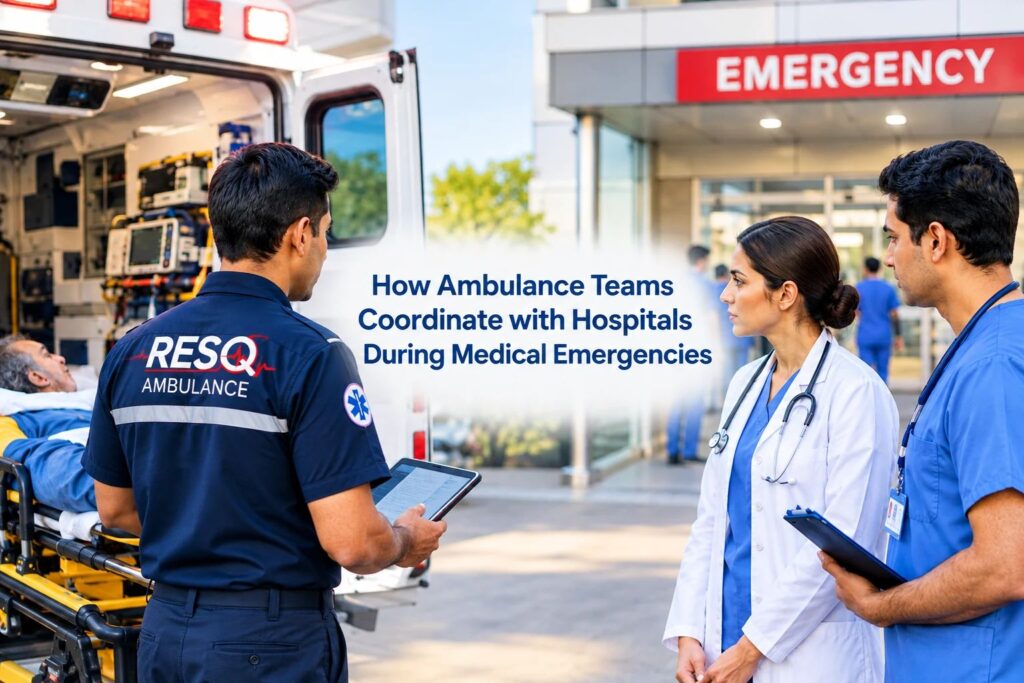
When an ambulance reaches the hospital, the patient must be handed over to the receiving medical team.
A proper handover helps hospital professionals understand what happened before arrival.
The ambulance team may communicate:
- Reason for transportation.
- Initial patient condition.
- Changes during the journey.
- Vital sign observations.
- First aid or other interventions provided.
- Relevant medical history.
The receiving team can then continue assessment and treatment.
Why Hospital Handover Documents Matter
Medical information should be communicated clearly and accurately.
Depending on the service and situation, documentation may include:
- Patient identification details.
- Emergency assessment findings.
- Vital sign records.
- Medication information.
- Treatment provided during transportation.
- Relevant medical reports.
Proper documentation supports continuity of care and helps avoid missing important information.
Coordination With Major Hospitals
Patients sometimes require emergency transportation to specialized healthcare facilities for further assessment and treatment.
For patients travelling to major medical institutions, RESQ Ambulance provides dedicated ambulance service near PGI Chandigarh and ambulance service near GMCH Sector 32 Chandigarh.
Proper coordination with the receiving hospital can help families organize patient transportation more efficiently.
How Families Can Help During Hospital Coordination
Family members can also support the ambulance and hospital teams by providing accurate information.
Before or during transportation, try to keep the following details available:
- Patient’s medical history.
- Current medications.
- Known allergies.
- Previous hospital reports.
- Doctor’s prescriptions.
- Emergency contact details.
If possible, inform the ambulance team about existing medical conditions and recent symptoms.
For additional preparation advice, read How to Prepare a Patient for Safe Ambulance Transportation.
The Role of Professional Ambulance Services
Professional ambulance services help connect emergency locations with healthcare facilities.
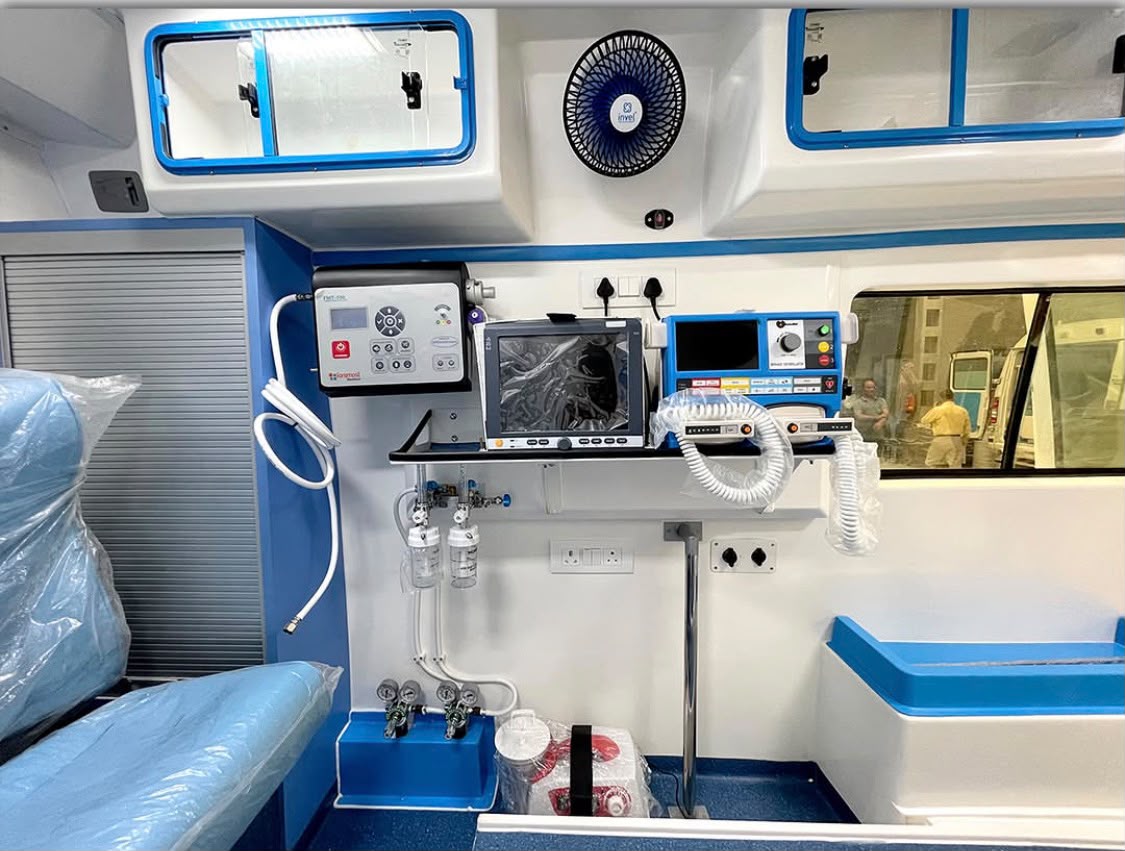
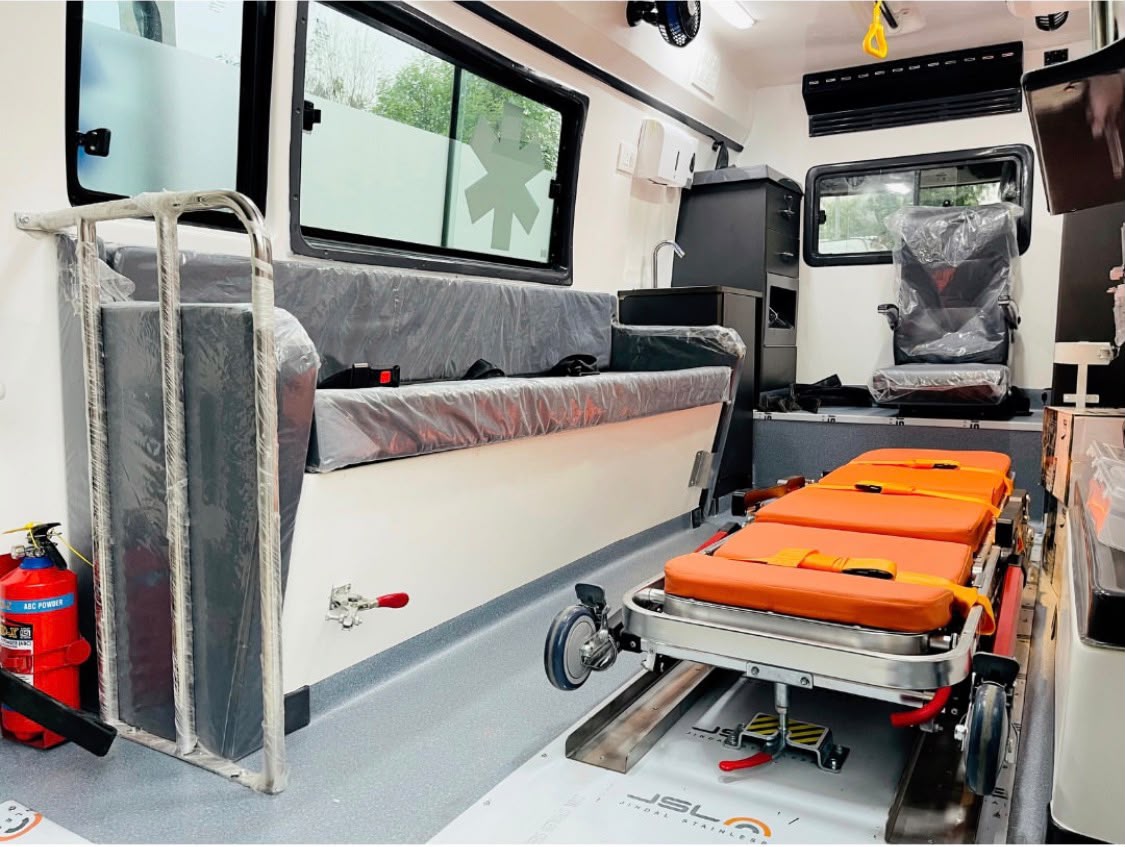
Depending on the patient’s medical requirements, ambulance services may provide:
- Basic patient assessment.
- Oxygen support.
- Vital sign monitoring.
- Emergency medical equipment.
- Trained medical personnel.
- Safe stretcher transportation.
- Communication with receiving hospitals.
If you need dependable ambulance service in mohali, RESQ Ambulance provides emergency and patient transportation services for different medical requirements.
RESQ Ambulance also provides ambulance service panchkula and ambulance number in kharar for patients requiring emergency transportation and hospital transfers across the Tricity region.
Common Communication Mistakes to Avoid
During medical emergencies, missing or incorrect information can create confusion.
Families and ambulance professionals should avoid:
- Providing incorrect medical history.
- Forgetting to mention known allergies.
- Hiding current medications.
- Giving inaccurate symptom timelines.
- Failing to communicate changes in the patient’s condition.
- Forgetting important medical documents.
Clear and accurate communication helps support better coordination between everyone involved in patient care.
Frequently Asked Questions
Why do ambulance teams contact hospitals before arrival?
They may share important patient information so hospital staff can understand the emergency and prepare the appropriate medical resources.
What information is shared with hospitals?
Information may include symptoms, vital signs, medical history, allergies, medications, and treatment provided during transportation.
Why is patient handover important?
A proper handover helps the hospital team understand the patient’s condition and continue appropriate medical assessment and treatment.
Do ambulance professionals monitor patients during transportation?
Depending on the ambulance type and patient’s condition, medical professionals may monitor vital signs, breathing, and other important health indicators.
Can family members help with hospital coordination?
Yes. Families can provide medical reports, prescriptions, medication details, allergy information, and relevant medical history.
Conclusion
Effective communication between ambulance teams and hospitals is an important part of emergency patient care. From initial patient assessment to hospital arrival and final handover, accurate information helps medical professionals understand the patient’s condition and prepare for further treatment.
Choosing a professional ambulance service that emphasizes patient safety, medical monitoring, and proper communication can make emergency transportation more organized and efficient.