
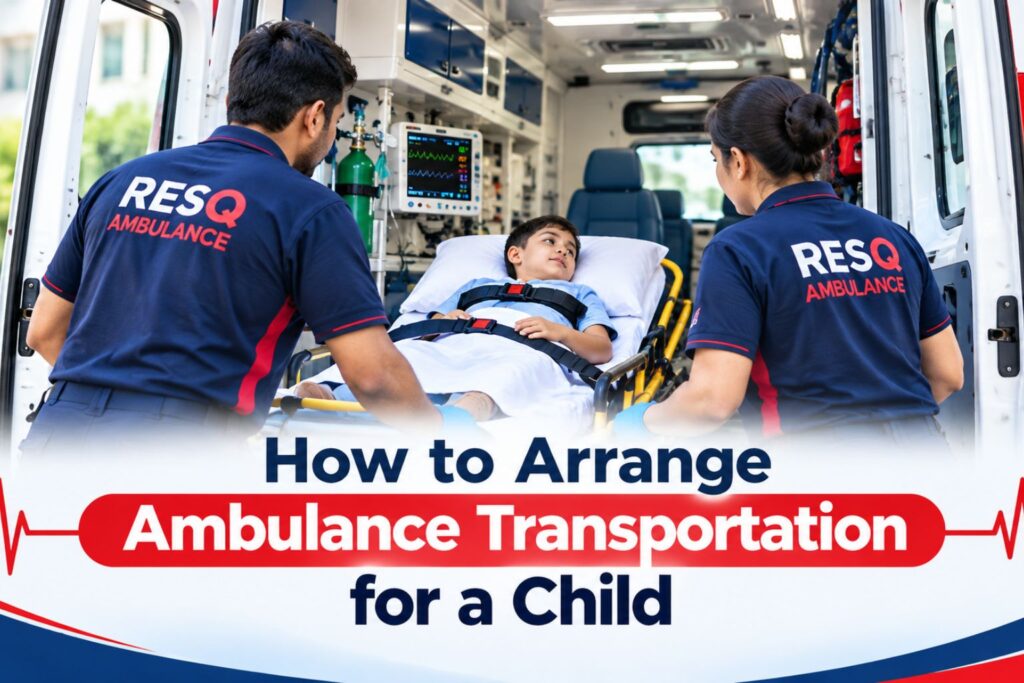
When a child needs medical attention, parents and caregivers may feel worried and unsure about the safest way to reach a hospital. Whether the child is experiencing a sudden illness, recovering from an injury, or needs transportation between healthcare facilities, choosing an appropriate ambulance and sharing accurate information can help make the journey more organized.
Ambulance transportation may be appropriate when a child needs medical assessment during the journey, cannot travel safely in a regular vehicle, or requires assistance getting to or from a healthcare facility. The right arrangement depends on the child’s condition and the level of support needed.
RESQ Ambulance helps families arrange patient transportation across its service areas. Understanding the booking process can help caregivers make informed decisions when arranging transport for a child.
1. Understand the Child’s Medical Needs
Before arranging transportation, consider the child’s current condition and the type of assistance required. For example, a child may need transport following a hospital consultation, for a scheduled appointment, after discharge, or during a transfer between hospitals.
If the child has severe breathing difficulties, becomes unresponsive, experiences a seizure that requires emergency assistance, has serious bleeding, or suffers a major injury, seek emergency medical help immediately. Do not delay emergency care while comparing transport options.
Explain the child’s symptoms and condition to the ambulance provider so the appropriate type of transport can be considered. The ambulance type should be based on clinical needs and professional guidance rather than the child’s age alone.
2. Choose an Appropriate Ambulance
Not every child requires the same level of medical support during transportation. A child who is stable and travelling for a planned appointment may have different needs from a child whose condition requires close monitoring.
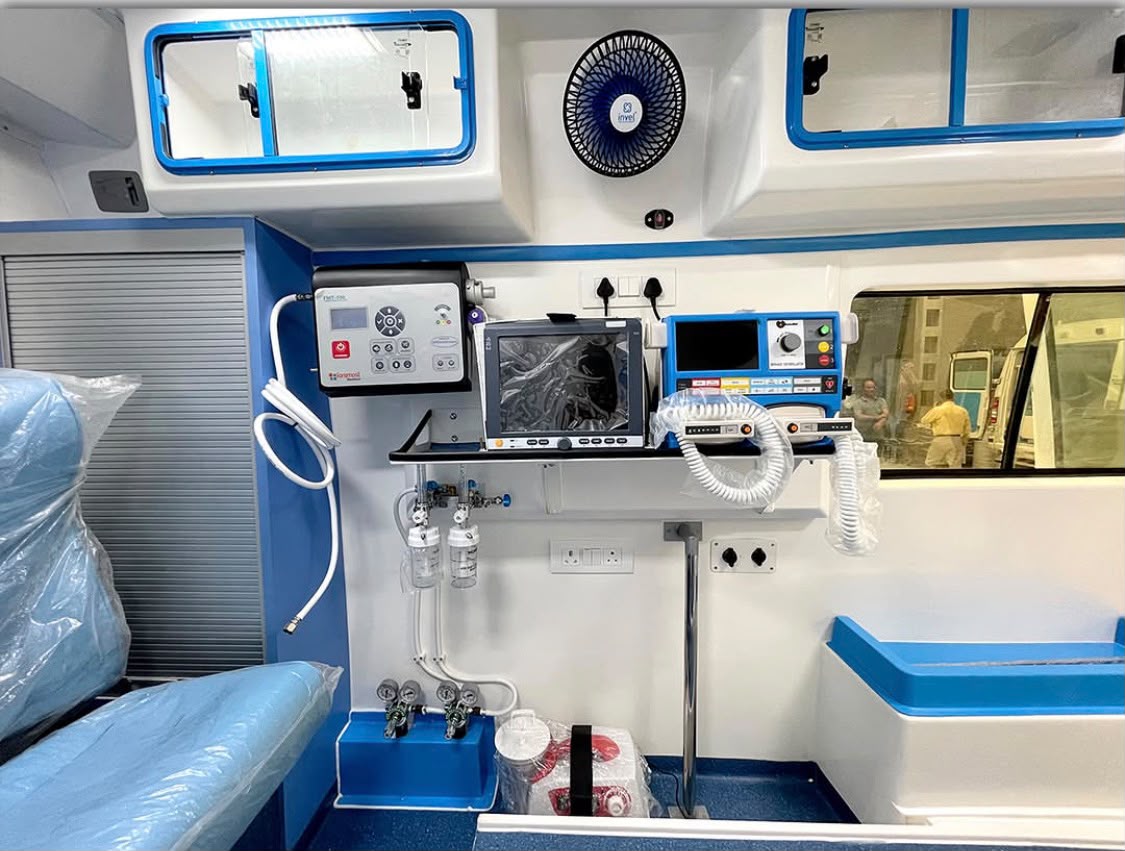
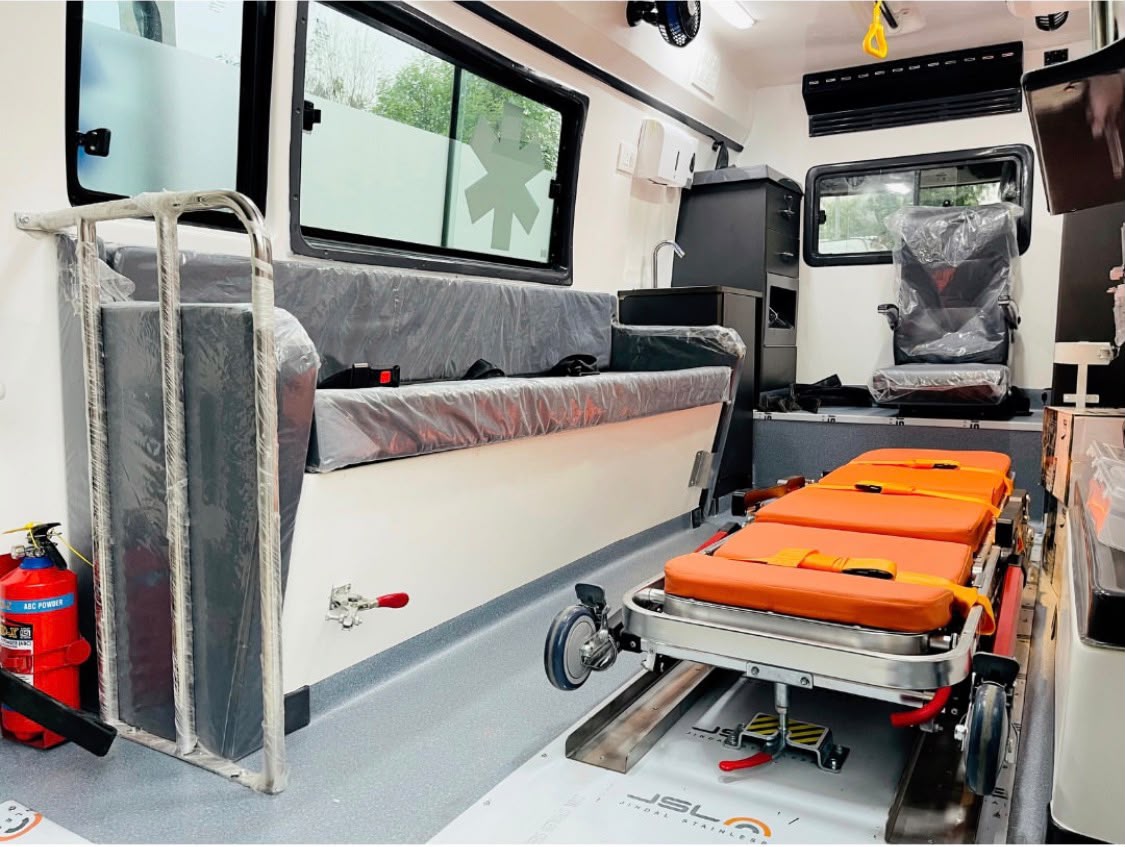
When arranging transport, ask the provider about the available ambulance type, patient-handling arrangements, and any medical equipment or trained personnel that may be needed.
For children who require monitoring or advanced support, consult the treating healthcare team about the level of care needed during the journey. Do not assume that every ambulance provides the same equipment or staffing.
3. Share Accurate Information When Booking
Clear information helps the ambulance provider understand the transport request. When calling to arrange an ambulance, be ready to share:
- The child’s age and current condition.
- The reason for transportation.
- The pickup address and destination hospital or facility.
- Whether the child can sit, stand, or needs to remain on a stretcher.
- Any known breathing support, oxygen, monitoring, or other special requirements.
- Whether the transport is an emergency, a hospital transfer, or a planned appointment.
- A contact number for the parent or caregiver.
For more guidance, read What Information Should You Provide When Booking an Ambulance?
Give the provider the most accurate information available. If the child’s condition changes while waiting, contact emergency services or the ambulance provider as appropriate.
4. Prepare Essential Medical Information
If time and the child’s condition permit, gather relevant medical documents before departure. These may include recent prescriptions, discharge summaries, investigation reports, allergy information, and details of ongoing treatment.
Tell the ambulance team about known allergies, existing medical conditions, and medicines the child takes. If the child has a treating doctor, share any specific transport instructions provided by the healthcare team.
Do not delay urgent transportation to collect paperwork or belongings. Medical records are helpful, but the child’s immediate safety comes first.
5. Keep the Child Safe Before the Ambulance Arrives
Follow the instructions provided by emergency dispatchers or medical professionals while waiting. Keep the child in a safe place and monitor their condition if it is safe to do so.
If the child has a serious injury, avoid unnecessary movement, especially when a head, neck, or spinal injury is possible. Do not give food, drinks, or medicines to a child who is unconscious or has difficulty swallowing. For a seizure or breathing emergency, follow the instructions of emergency professionals.
Parents can also review What to Do While Waiting for an Ambulance to Arrive
If the child’s condition worsens, tell the emergency dispatcher or ambulance team immediately. Do not wait for the originally estimated arrival time if urgent medical assistance is needed.
6. Make the Journey Easier for the Child
Children may feel frightened by unfamiliar surroundings, medical equipment, or separation from their usual routine. When appropriate, a parent or caregiver can help by speaking calmly and reassuring the child.
Ask the ambulance provider whether a caregiver can accompany the child, as this may depend on the ambulance layout, safety requirements, and the child’s medical needs.
For a planned journey, keep essential documents and contact details accessible. Follow the ambulance team’s instructions about seating, stretcher positioning, and movement during transport. Never interfere with medical equipment or attempt to change the child’s position without guidance.
7. Arrange Transportation for Hospital Visits and Transfers
Ambulance transportation may be useful for children who need to attend scheduled hospital appointments, return home after treatment, or travel to another healthcare facility. The appropriate arrangements depend on the child’s mobility, condition, and clinical requirements.
Families seeking an ambulance service in Zirakpur, an ambulance service in Chandigarh, or an ambulance service in Mohali can contact RESQ Ambulance to discuss the pickup location, destination, and support needed.
For hospital-related journeys, families may also need to coordinate with the treating facility. If the child is being transferred between hospitals, confirm the receiving facility and ask the healthcare team what monitoring or support is required during transport.
For journeys involving a child who cannot move easily, see How to Arrange Safe Ambulance Transportation for Patients with Limited Mobility
8. Confirm the Booking Details
Before a planned journey, confirm the pickup address, destination, expected arrangements, and contact number with the ambulance provider. Ask about the estimated arrival time and any preparation required.
Families looking for an ambulance service in Panchkula or an ambulance service in Kharar can share their location and transport requirements with RESQ Ambulance to check service availability.
For hospital visits, confirm appointment details and any instructions from the treating team. For urgent or life-threatening situations, contact emergency services without delay rather than relying on a routine booking.
Frequently Asked Questions
1. When should a child be transported by ambulance?
An ambulance may be appropriate when a child needs medical assistance during transport, cannot travel safely in an ordinary vehicle, requires stretcher transportation, or needs a medically supported hospital transfer. In a life-threatening emergency, seek emergency medical help immediately.
2. Can a parent accompany a child in an ambulance?
This depends on the ambulance’s capacity, safety arrangements, and the child’s medical needs. Ask the provider when booking and follow the ambulance team’s instructions.
3. What information is needed to book an ambulance for a child?
Share the child’s age, current condition, pickup and destination addresses, mobility needs, relevant medical support requirements, and a contact number. In an emergency, do not delay calling for help to gather every detail.
4. Should parents bring the child’s medical records?
Bring relevant prescriptions, reports, allergy details, and discharge documents if they are readily available. Do not delay urgent care to collect documents.
5. Can an ambulance be arranged for a child’s hospital discharge?
Depending on availability and the child’s needs, ambulance transportation may be arranged for discharge or a planned hospital visit. Ask the treating team whether any special transport support is required.
6. How can I arrange child ambulance transportation through RESQ Ambulance?
Call 7814137719 to discuss the child’s transport needs, pickup location, destination, and any required medical support. For emergencies that are immediately life-threatening, contact emergency services promptly.
Conclusion
Arranging ambulance transportation for a child begins with understanding the child’s condition, communicating accurate information, and choosing transport appropriate to the level of care required. Preparing essential medical details, following professional instructions, and confirming the journey arrangements can help families approach the process more confidently.
For assistance arranging patient transportation, contact RESQ Ambulance at 7814137719. Share the pickup and destination details and explain the child’s needs so the available options can be discussed.