

Patient transportation is not the same for everyone. A stable patient travelling for a routine appointment may only need basic transportation, while a critically ill patient may require continuous medical monitoring and advanced support throughout the journey.
An ICU ambulance is designed for patients who need a higher level of medical care while travelling. It provides a controlled environment with specialized equipment and trained medical staff so that essential support can continue during transportation.
For families arranging medical transportation in Zirakpur, Chandigarh, Mohali, Kharar, Panchkula, or nearby areas, understanding when an ICU ambulance is appropriate can help them make a safer decision.
What Is an ICU Ambulance?
An ICU ambulance is a specialized ambulance designed to provide intensive medical support during patient transportation.
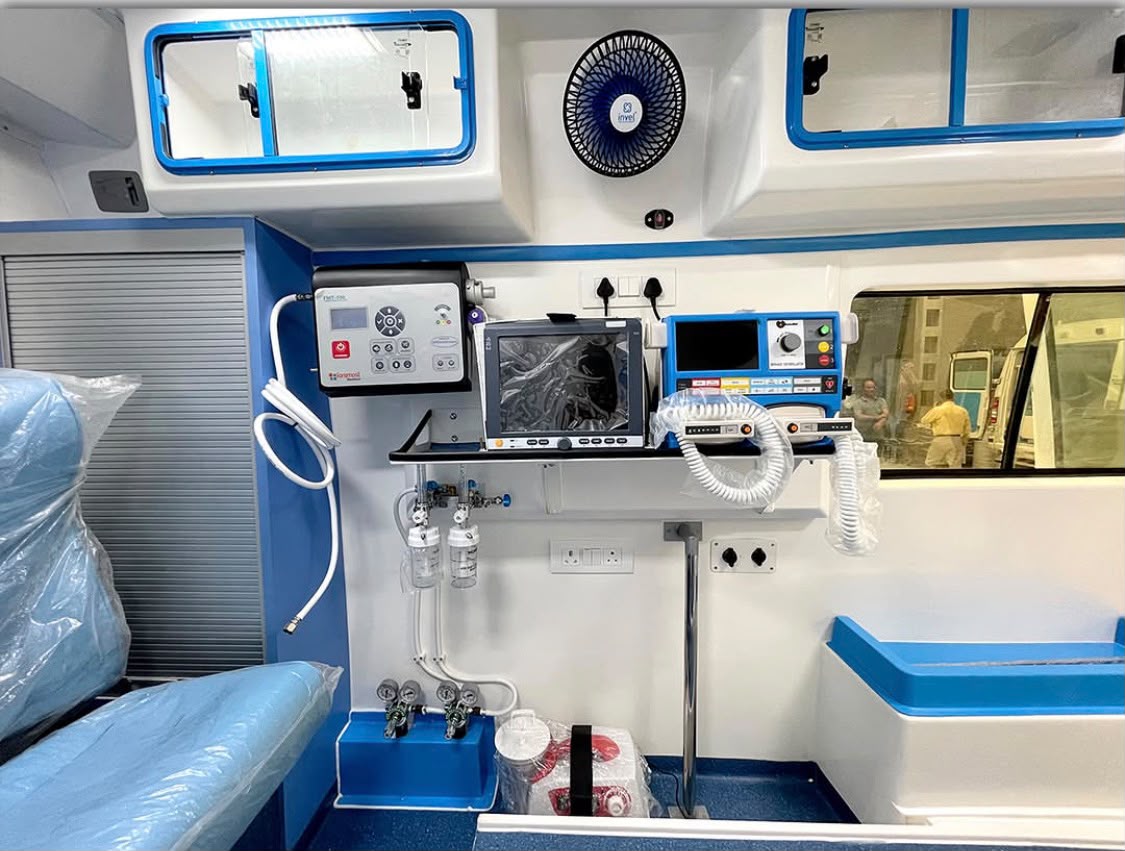
Unlike a basic patient transport vehicle, an ICU ambulance can be equipped with advanced medical equipment required for critically ill patients. Depending on the patient’s condition and the service provider, this may include:
- Ventilator support
- Oxygen supply
- Cardiac monitoring
- Infusion pumps
- Suction equipment
- Emergency medicines
- Defibrillation equipment
- Monitoring devices
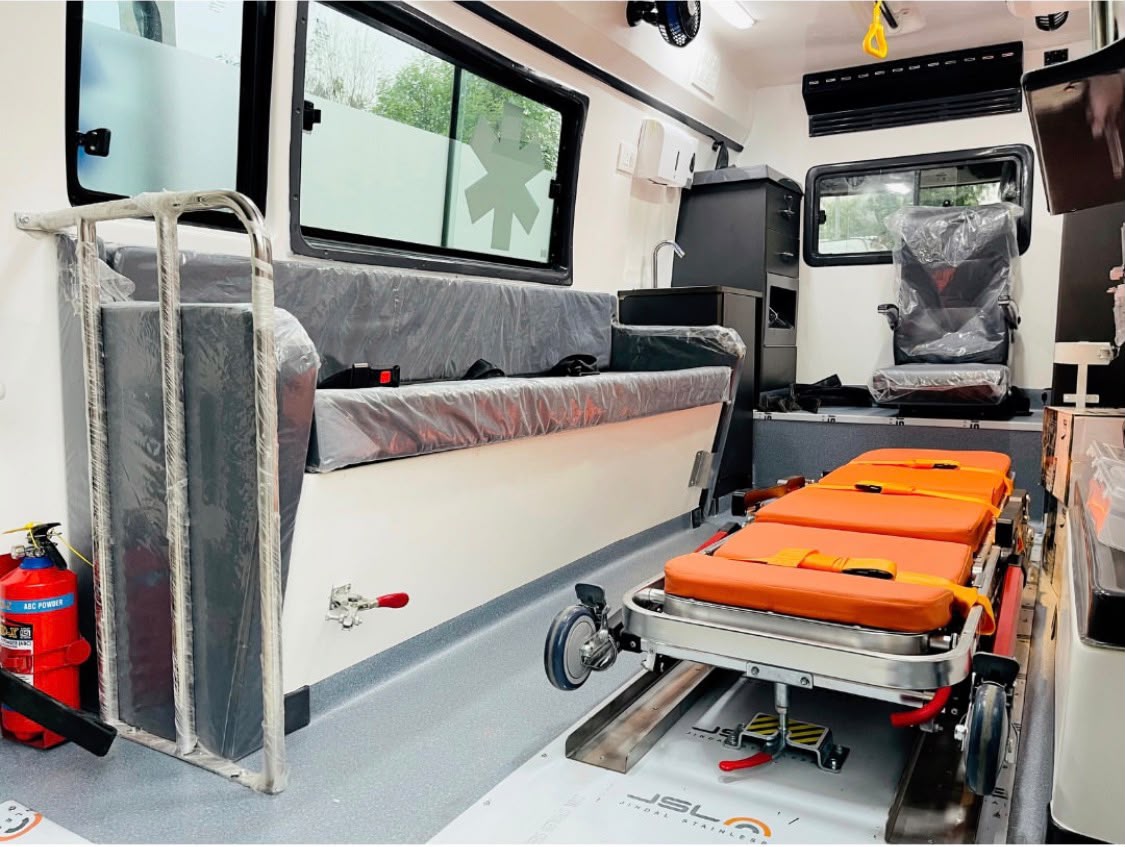
- Stretcher systems
- Other critical-care equipment
The exact equipment and medical team can vary depending on the ambulance and the patient’s requirements.
The purpose is to provide a level of support during transportation that is appropriate for patients who cannot safely travel without medical supervision.
When Does a Patient Need an ICU Ambulance?
An ICU ambulance may be considered when a patient’s condition is unstable or when there is a significant risk of deterioration during transportation.
Some common situations include:
Patients on a Ventilator
Patients who depend on mechanical ventilation may require specialized transportation.
Moving such a patient in a regular vehicle is generally not appropriate because the patient may need continuous ventilator support and monitoring throughout the journey.
A ventilator-equipped critical-care ambulance can provide the necessary environment for transportation.
Patients Requiring Continuous Monitoring
Some patients need their vital signs monitored throughout the journey.
This can include patients with serious cardiac, respiratory, neurological, or other critical conditions.
Monitoring can help the medical team identify changes in the patient’s condition during transportation.
Critically Ill Hospital Patients
A patient admitted to an intensive care unit may need to be transferred to another hospital for specialized treatment, a procedure, or access to a particular medical facility.
In such situations, stopping critical care during transportation may not be appropriate.
An ICU ambulance can help continue the required support while the patient is moved between facilities.
Patients Requiring High Oxygen Support
Some patients have significant respiratory problems and require more than routine oxygen support.
When oxygen requirements are high or the patient’s condition is unstable, a specialized ambulance may be more appropriate than a basic patient transport ambulance.
Serious Cardiac Conditions
Patients with serious cardiac conditions may require continuous monitoring and rapid access to emergency equipment.
An ICU ambulance can provide a more suitable environment for transporting patients who are medically unstable.
Severe Infections or Multi-Organ Problems
Patients with severe infections or multiple medical complications may require close monitoring and ongoing medical support.
If such a patient needs to be transferred to another medical facility, the ambulance type should be selected according to the patient’s current condition.
Why Is an ICU Ambulance Different From a Regular Ambulance?
The biggest difference is the level of medical support available during transportation.
A basic ambulance may be appropriate for a stable patient who does not require intensive medical intervention.
An ICU ambulance, on the other hand, is intended for patients who may need advanced monitoring or life-support equipment.
The difference can involve:
Basic patient transportation
- Suitable for stable patients
- Basic transportation support
- Stretcher or wheelchair assistance
- Basic oxygen support where available
Critical-care transportation
- Advanced monitoring
- Ventilator support when required
- More extensive emergency equipment
- Specialized medical personnel
- Greater capability to manage changes in a critically ill patient’s condition
The appropriate ambulance should always be selected according to the patient’s medical needs.
Hospital-to-Hospital Transfers
One of the most common situations where an ICU ambulance may be required is a hospital-to-hospital transfer.
A patient may need to move because:
- A specialist is available at another hospital
- Advanced treatment is required
- A procedure is unavailable at the current facility
- The patient needs to be transferred to an ICU
- A higher-level medical centre has been recommended
- A bed is available at another hospital
For a critically ill patient, transportation itself becomes part of the medical care process.
The patient’s condition should therefore be discussed with the treating medical team before arranging the ambulance.
ICU Ambulance for Long-Distance Transfers
Long-distance patient transportation can present additional challenges.
The longer the journey, the longer the patient may need medical support and monitoring.
For a critically ill patient, a private car may not be appropriate for a long journey because it lacks the equipment and medical supervision that may be required.
A specialized ambulance can allow the patient to remain in a controlled medical environment while travelling between cities.
If the patient is being moved from the Tricity region to another city, it is particularly important to discuss the journey distance, patient’s condition, oxygen requirements, and medical support needed before booking.
You can also read our earlier article on [How Ambulance Services Support Patients During Long-Distance Transfers] for more information about planning longer patient journeys.
How Does an ICU Ambulance Help During Transportation?
The main advantage is continuity of medical support.
A critically ill patient may require:
Continuous Vital Monitoring
Depending on the patient’s condition, the medical team may monitor parameters such as:
- Heart rate
- Blood pressure
- Oxygen saturation
- Respiratory status
- Other clinically relevant measurements
Oxygen or Ventilator Support
Patients who cannot maintain adequate breathing independently may need oxygen or ventilator support during the journey.
Emergency Intervention
A properly equipped critical-care ambulance can carry emergency equipment needed if the patient’s condition changes during transportation.
Safe Patient Positioning
Critically ill patients often need careful positioning and secure transfer onto the ambulance stretcher.
This can be especially important for patients with serious injuries, neurological problems, or limited mobility.
What Information Should You Provide Before Booking?
Before arranging an ICU ambulance, provide as much accurate information as possible.
The ambulance provider may need to know:
- Patient’s age
- Current medical condition
- Diagnosis, if known
- Whether the patient is conscious
- Whether the patient is on oxygen
- Whether the patient is on a ventilator
- Current hospital or pickup location
- Destination hospital
- Approximate travel distance
- Any special equipment required
- Whether a doctor or nurse is already accompanying the patient
This information helps determine what type of ambulance and medical support may be appropriate.
Why You Should Not Choose an Ambulance Only by Price
When transporting a critically ill patient, the cheapest option is not necessarily the safest option.
The important question is whether the ambulance has the appropriate equipment and medical support for the patient’s condition.
Before booking, families should consider:
- Type of ambulance
- Available medical equipment
- Medical staff accompanying the patient
- Oxygen availability
- Ventilator capability, if required
- Monitoring equipment
- Distance of transportation
- Patient’s current stability
A lower-cost ambulance may not be suitable if the patient requires advanced critical-care support.
Can an ICU Ambulance Be Used for Emergency Transportation?
Yes. ICU ambulances can be used for emergency transportation when the patient’s condition requires advanced medical support.
However, the need for an ICU ambulance depends on the patient’s medical condition.
Not every emergency requires an ICU ambulance. A stable patient may be safely transported in a different type of ambulance.
The key is to communicate the patient’s condition clearly so the appropriate ambulance can be arranged.
ICU Ambulance Services in the Tricity Region
Patients in and around Zirakpur, Chandigarh, Mohali, Kharar, and Panchkula may need specialized transportation for different medical situations.
For example, a patient in Zirakpur requiring critical-care transportation may need an appropriate ambulance number in zirakpur when arranging an urgent pickup.
Similarly, families looking for kharar ambulance services may need to explain whether the patient is stable, requires oxygen, or needs advanced medical support.
For patients travelling toward Chandigarh hospitals, families may also need to arrange an ambulance service in chandigarh that is suitable for the patient’s condition.
In Mohali, an appropriate ambulance number in mohali can be useful to have available when arranging urgent medical transportation.
Patients in Panchkula and surrounding areas may also require specialized transport, particularly when being transferred to a larger medical centre.
Transportation to Major Hospitals
Patients may need to be transported to specialized hospitals for treatment that is not available at their current facility.
When a critically ill patient is being moved toward major hospitals, planning the ambulance service in advance can reduce confusion.
For patients travelling toward PGI, families can consider arranging an ambulance service near PGI Chandigarh that is suitable for the patient’s medical condition.
For transfers involving Government Medical College and Hospital Sector 32, families may also need an ambulance service near GMCH Sector 32 Chandigarh.
The ambulance requirement should always be based on the patient’s condition rather than simply the destination.
How to Prepare a Critically Ill Patient for Transfer
The treating hospital should guide the family about preparation.
Important documents may include:
- Current medical records
- Investigation reports
- Imaging reports
- Medication list
- Discharge or transfer documents
- Identification documents
- Referral letter
- Doctor’s instructions
The family should also confirm:
- Pickup location
- Destination hospital
- Required ambulance type
- Expected journey duration
- Whether a medical professional will accompany the patient
- Any special equipment needed
Proper preparation can make the transfer more organized.
What Family Members Should Do During an ICU Ambulance Transfer
Family members should generally allow the medical team to manage the patient during transportation.
Avoid crowding around the patient or interfering with equipment.
Keep important documents accessible and remain available for communication with the ambulance staff.
If the family member is travelling separately, they should know the destination hospital and expected arrival location.
For longer transfers, it is also useful to carry essential personal items and medical documents separately so they remain easily accessible.
When an ICU Ambulance May Not Be Necessary
An ICU ambulance is not automatically required for every patient who needs an ambulance.
For example, a patient who is:
- Medically stable
- Breathing independently
- Not requiring continuous monitoring
- Not dependent on advanced life support
- Travelling for a routine appointment
may require a different type of ambulance.
Similarly, patients being discharged from a hospital may need a patient transport or discharge ambulance rather than an ICU ambulance, depending on their condition.
Choosing the correct ambulance helps ensure that resources and medical support match the patient’s actual needs.
The Importance of Medical Advice
The family should not try to determine the required level of critical-care support based only on symptoms or appearance.
If the patient is already admitted to a hospital, ask the treating doctor or medical team what type of transportation is appropriate.
They can advise whether the patient requires:
- Basic ambulance transportation
- Oxygen ambulance
- Advanced Life Support ambulance
- ICU ambulance
- Ventilator ambulance
- Another specialized transportation arrangement
Medical advice is particularly important for patients whose condition can change quickly.
Frequently Asked Questions
What is an ICU ambulance?
An ICU ambulance is a specialized ambulance designed to transport critically ill patients who may require advanced medical equipment, monitoring, oxygen, ventilator support, or other critical-care assistance during transportation.
Does every patient need an ICU ambulance?
No. ICU ambulances are generally intended for patients with more complex or unstable medical conditions. Stable patients may require a different type of ambulance.
Can an ICU ambulance transport a ventilator patient?
Yes, a suitable ICU or ventilator ambulance can be equipped to transport patients who require mechanical ventilation, provided the ambulance has the appropriate equipment and medical support.
Can ICU ambulances be used for hospital transfers?
Yes. They are commonly used when a critically ill patient needs to be transferred between hospitals while continuing to receive medical support.
Can an ICU ambulance be used for long-distance transportation?
Yes. Specialized ambulances can be used for long-distance transfers when the patient’s condition requires continuous medical support during the journey.
How do I know which ambulance to book?
Explain the patient’s medical condition, oxygen requirements, ventilator dependence, mobility, pickup location, and destination to the ambulance provider. If the patient is already in a hospital, discuss the transportation requirement with the treating medical team.
Conclusion
An ICU ambulance is designed for situations where a patient’s medical needs go beyond basic transportation. Critically ill patients may require continuous monitoring, oxygen, ventilator support, emergency equipment, and trained medical assistance throughout their journey.
Whether the transfer is between hospitals, across cities, or to a specialized medical centre, selecting the right ambulance can help maintain continuity of care during transportation.
If you are arranging an ambulance for a seriously ill patient, provide complete information about the patient’s condition and ask for an ambulance that is properly equipped for the required level of medical support.