
Transporting a critically ill patient requires much more than simply moving them from one location to another. Patients in intensive care often depend on advanced medical equipment, continuous monitoring, and experienced healthcare professionals throughout the journey. Even a short interruption in medical care can put the patient’s life at risk.
This is where an ICU ambulance plays an important role. Designed as a mobile intensive care unit, these ambulances are equipped with advanced life-support systems and staffed by trained medical professionals who can manage emergencies during transportation.
Whether a patient needs to be transferred between hospitals, discharged with intensive care support, or transported after a serious medical emergency, an ICU ambulance ensures that treatment continues without interruption.
What Is an ICU Ambulance?
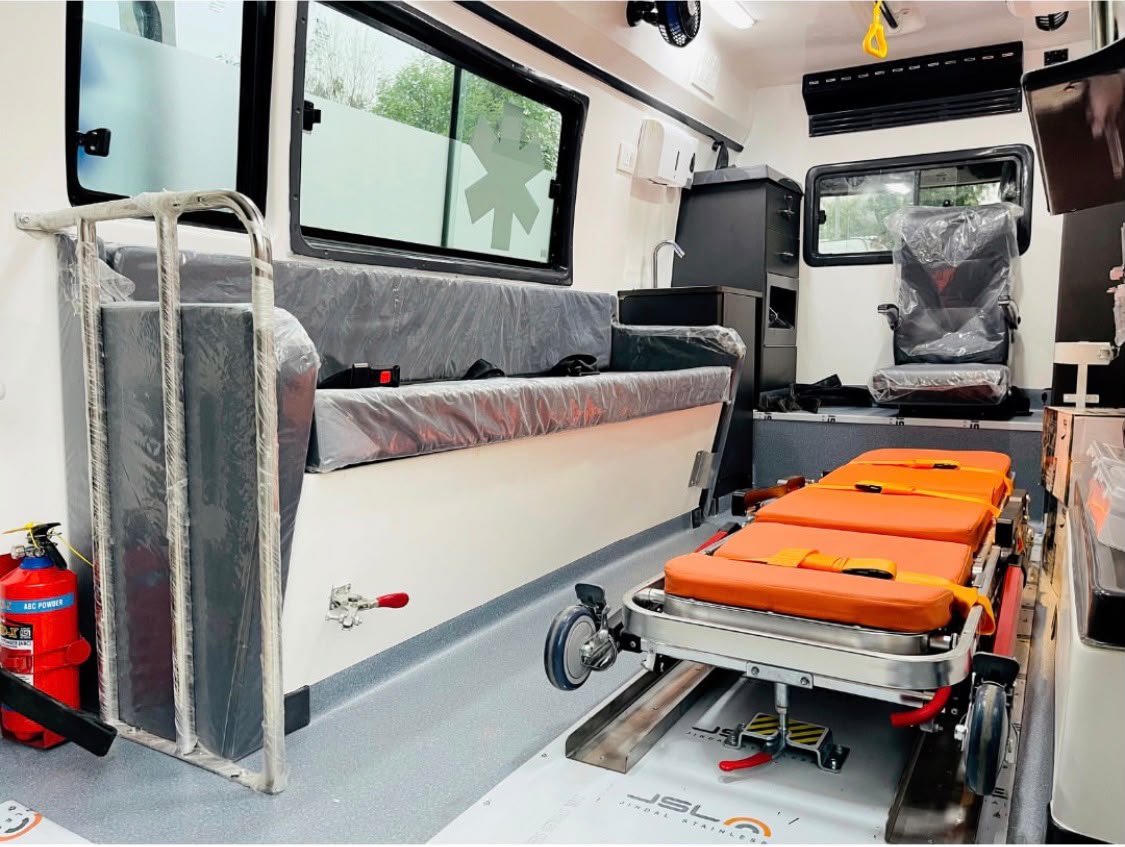
An ICU ambulance is a specially equipped emergency vehicle designed to provide intensive care while transporting critically ill patients.
Unlike a standard ambulance, an ICU ambulance contains advanced medical equipment that allows healthcare professionals to monitor and treat patients throughout the journey.
If you require critical patient transportation, RESQ Ambulance provides dependable zirakpur ambulance services with fully equipped ICU ambulances available 24×7.
Who Needs an ICU Ambulance?
An ICU ambulance is recommended for patients whose condition requires continuous monitoring and advanced medical support.
Common situations include:
- Patients on ventilators
- Heart attack recovery
- Stroke patients
- Severe trauma cases
- Brain injury patients
- Organ failure
- High-risk post-surgical patients
- Critically ill newborns
- Patients requiring continuous oxygen support
These patients cannot be transported safely in ordinary vehicles.
Advanced Medical Equipment Available
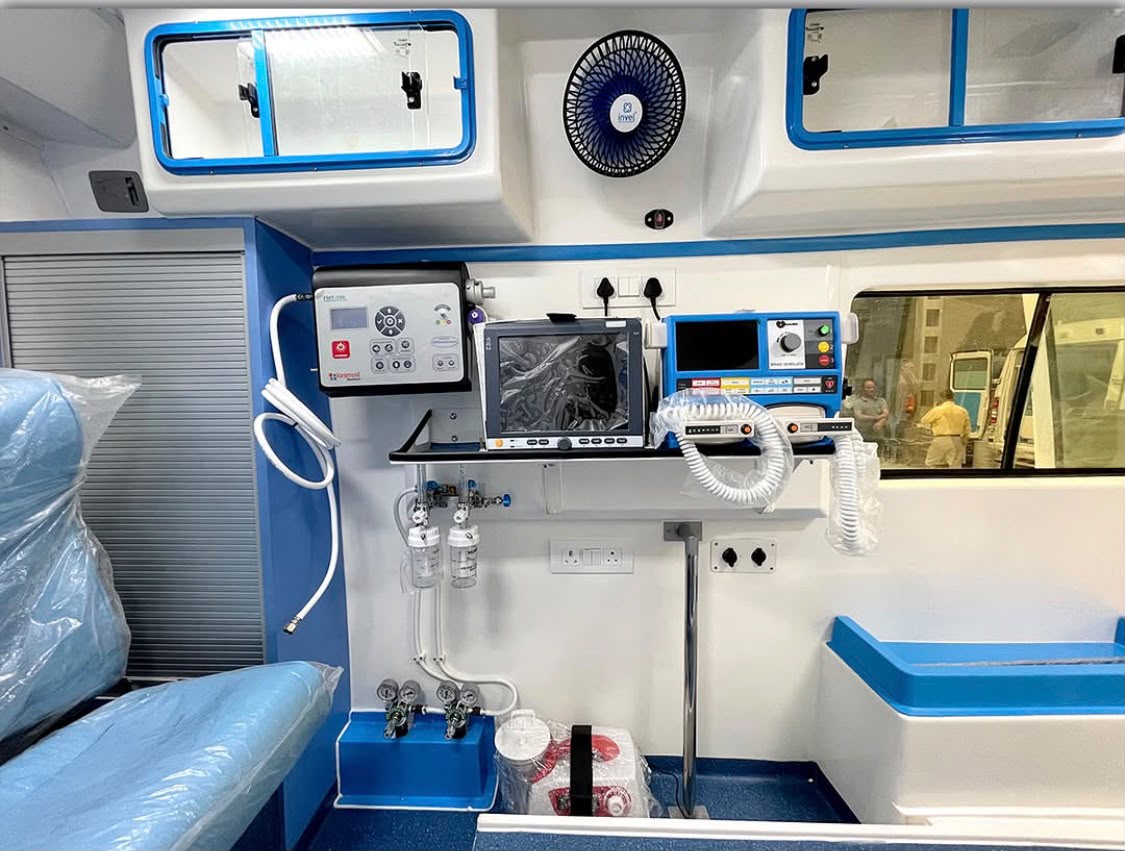
ICU ambulances are equipped with technology similar to that found in hospital intensive care units.
Common equipment includes:
- Cardiac monitors
- Ventilators
- Defibrillators
- Infusion pumps
- Syringe pumps
- Oxygen cylinders
- Suction machines
- Emergency medicines
- Portable ECG machines
- Pulse oximeters
This equipment allows medical professionals to respond immediately if the patient’s condition changes.
Continuous Patient Monitoring
One of the biggest advantages of an ICU ambulance is continuous monitoring.
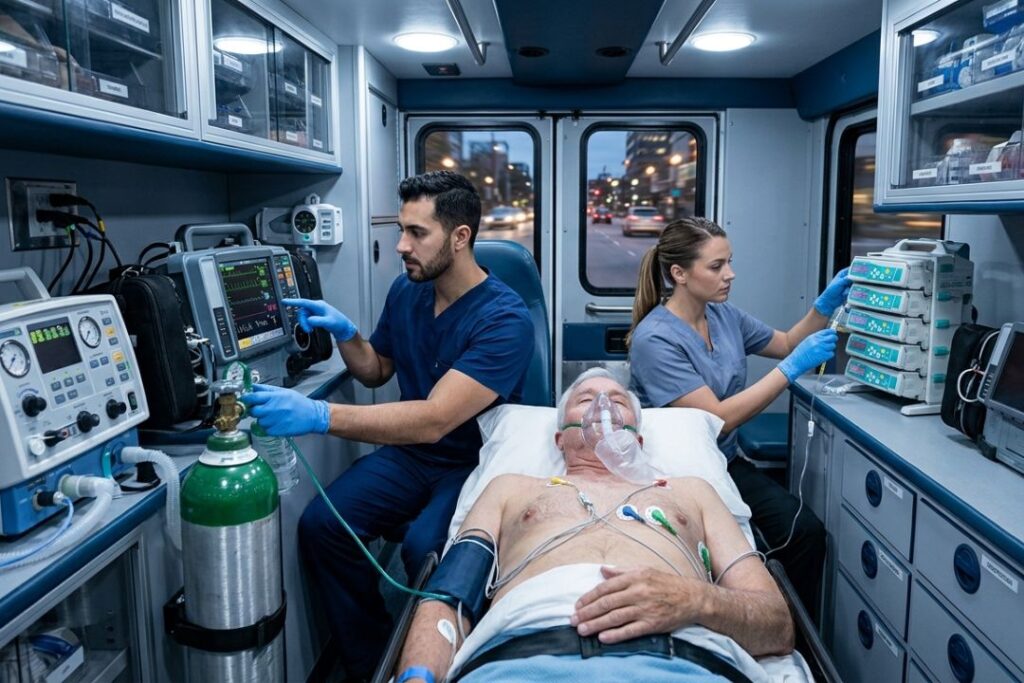
Medical professionals regularly observe:
- Heart rate
- Blood pressure
- Oxygen saturation
- Respiratory rate
- Body temperature
- Cardiac rhythm
Continuous monitoring helps detect complications before they become life-threatening.
Trained Medical Professionals Onboard
ICU ambulances are staffed by experienced healthcare professionals trained in emergency and critical care.
Depending on the patient’s condition, the medical team may include:
- Critical care paramedics
- Emergency medical technicians
- Nurses
- Doctors (when required)
Their expertise ensures patients receive uninterrupted treatment during transportation.
Safe Inter-Hospital Transfers
Many critically ill patients require transfer to hospitals with specialized medical facilities.
An ICU ambulance provides safe transportation for patients moving:
- From one hospital to another
- From ICU to rehabilitation centers
- From hospital to home under medical supervision
- To specialized cardiac or neurological centers
This ensures continuity of treatment throughout the transfer.
ICU Ambulances for Ventilator Patients
Patients who depend on ventilators require specialized transportation.
An ICU ambulance provides:
- Portable ventilator support
- Backup oxygen supply
- Continuous airway monitoring
- Emergency respiratory care
This allows ventilator-dependent patients to travel safely without interrupting life support.
If you’re searching for a dependable ambulance service in chandigarh, choosing an ICU ambulance ensures advanced medical care throughout patient transport.
Emergency Care During Transportation
Medical emergencies can occur at any point during transportation.
An ICU ambulance allows the medical team to respond immediately by:
- Administering medications
- Performing CPR if required
- Managing cardiac emergencies
- Controlling bleeding
- Stabilizing vital signs
- Providing advanced airway management
Immediate intervention significantly improves patient safety.
ICU Ambulances Reduce Treatment Delays
Because treatment continues during transportation, valuable time is not lost after reaching the hospital.
Medical teams can communicate with the receiving hospital before arrival, allowing doctors to prepare for immediate treatment.
This coordinated approach improves emergency care and patient outcomes.
Why ICU Ambulances Are Better Than Private Vehicles
Transporting critically ill patients in a private vehicle can be extremely dangerous.
Private vehicles cannot provide:
- Intensive care monitoring
- Ventilator support
- Oxygen therapy
- Emergency medications
- Cardiac monitoring
- Trained medical professionals
Professional ICU ambulances eliminate these risks by providing hospital-level care throughout the journey.
Situations Where an ICU Ambulance Is Recommended
Doctors commonly recommend ICU ambulance services for:
- Ventilator-dependent patients
- Cardiac emergencies
- Brain injuries
- Multiple fractures
- Organ transplant patients
- Severe respiratory illness
- High-risk neonatal transport
- ICU hospital transfers
Choosing the correct ambulance helps reduce complications during transportation.
Benefits of Choosing an ICU Ambulance
Professional ICU ambulance services offer many advantages:
- Advanced medical equipment
- Continuous monitoring
- Experienced medical staff
- Oxygen support
- Safe patient handling
- Faster emergency response
- Better coordination with hospitals
- Improved patient safety
These benefits make ICU ambulances the preferred choice for critically ill patients.
RESQ Ambulance also provides trusted ambulance service mohali, reliable ambulance service panchkula, and prompt ambulance service kharar for emergency and critical patient transportation across the Tricity region.
Frequently Asked Questions
What is an ICU ambulance?
An ICU ambulance is a mobile intensive care unit equipped with advanced life-support systems and trained medical professionals for transporting critically ill patients.
Who should use an ICU ambulance?
Patients requiring continuous monitoring, ventilator support, oxygen therapy, or advanced medical care during transportation should use an ICU ambulance.
Does an ICU ambulance include a ventilator?
Yes. Most ICU ambulances are equipped with portable ventilators for patients who require respiratory support.
Can ICU ambulances transfer patients between hospitals?
Yes. ICU ambulances are commonly used for inter-hospital transfers while maintaining continuous medical care.
Are trained medical professionals available during transport?
Yes. ICU ambulances are staffed by experienced paramedics, nurses, and, when required, doctors.
Conclusion
An ICU ambulance is much more than an emergency vehicle. It functions as a mobile intensive care unit, allowing critically ill patients to receive uninterrupted medical treatment throughout transportation.
With advanced life-support equipment, experienced healthcare professionals, and continuous patient monitoring, ICU ambulances provide the highest level of safety during emergency transfers, hospital referrals, and critical care transportation.
Choosing a professional ICU ambulance ensures that every minute of the journey contributes to the patient’s recovery rather than delaying treatment.